Are Foreclosures Increasing in 2026? What Home Buyers Should Know
Are foreclosures increasing in 2026? Learn what the latest data means for home buyers, housing market stability, and how to find the best real estate agents in Central Florida to secure the right home.
If you’ve been following real estate headlines lately, you may have noticed growing discussions about foreclosures. That naturally raises an important question for buyers: are foreclosures increasing in 2026, and does it signal trouble for the housing market?
Many people immediately think back to the 2008 housing crash, when foreclosures surged and property values fell dramatically. But the current housing environment is very different.
For home buyers, understanding what’s really happening in the market is essential. The good news is that current data points toward housing market stability, not a collapse. If you're considering purchasing a home, especially if you're looking at houses for sale central florida, the situation may actually present opportunities rather than risks.
Let’s explore what the data shows and what it means for buyers in today’s market.
One Key Sign We’re Not Headed for a Wave of Foreclosures
Foreclosures are ticking up. And that may make your mind jump straight to thoughts of 2008 – specifically to what happened to the market during the housing crash. So, let’s do exactly what your brain already wants to do, and see if there’s any connection there.
The simple truth is foreclosure filings are rising. But they’re nowhere near crisis levels. And that’s not where they’re headed either. Here’s why.
Take a look at serious delinquencies – loans where the homeowner is more than 90 days late on their mortgage payments.
While those have increased slightly, data from the New York Fed shows they still remain low. And they aren’t anywhere close to levels seen when the market crashed.
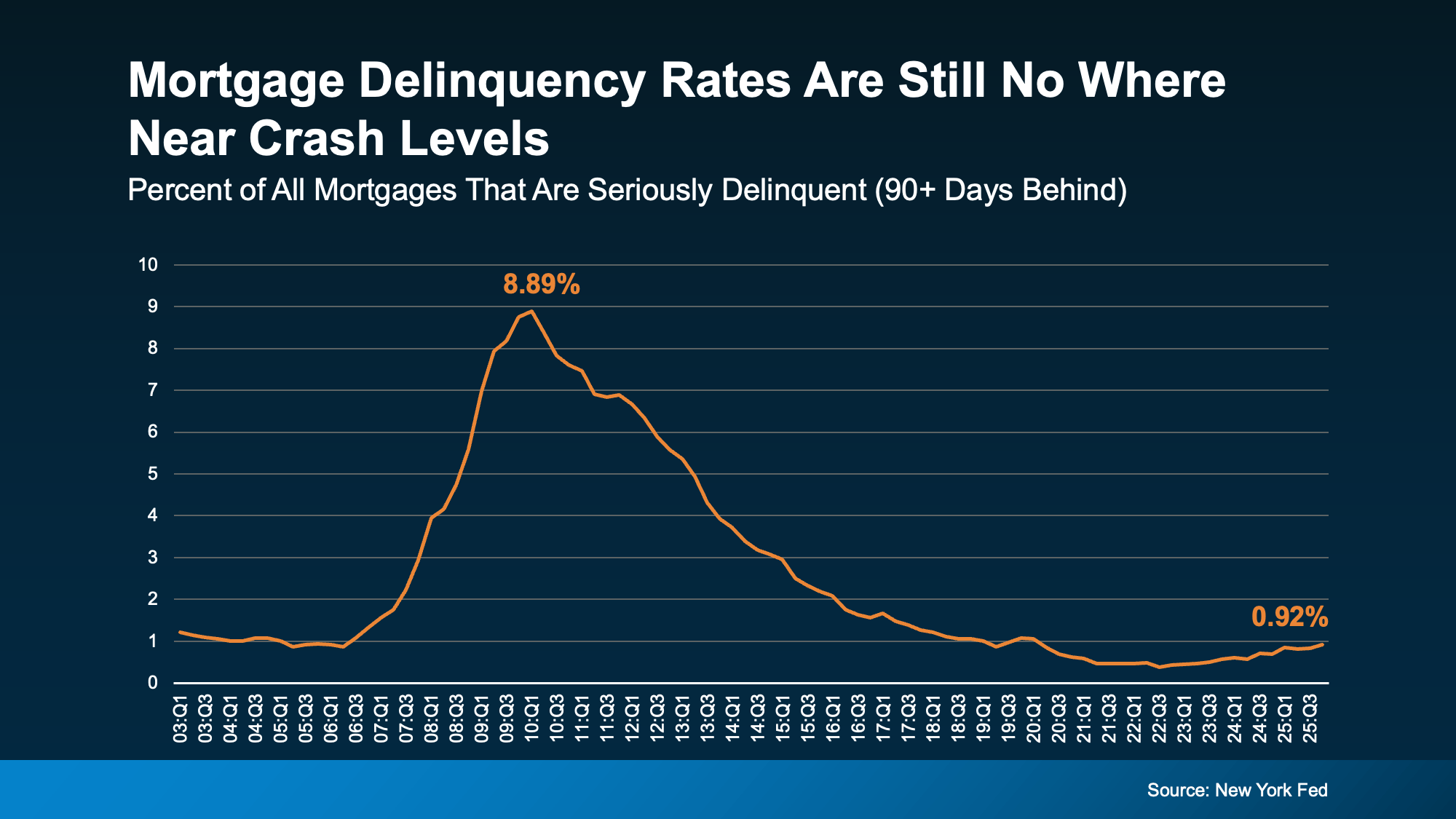
Right now, about 1% of mortgages are seriously delinquent. That’s only 1 in 100.
In the years around the crash, they were up around 9%. That’s 1 in 11.
That’s a big difference.
And it’s important to remember not all delinquencies even become foreclosure filings. Some homeowners who are falling behind will work out repayment plans with their banks and lenders because banks don’t want to see a wave of foreclosures either.
That’s why foreclosure numbers are even lower than delinquencies. ATTOM shows only 0.3% of all homes are currently going through a foreclosure filing. And those won’t even all go to a full foreclosure. That’s not a wave. That’s a ripple at most.
That’s not a wave. That’s a ripple at most.

Why This Matters for Home Buyers
For buyers entering the market, these numbers are actually encouraging.
For buyers entering the market, these numbers are actually encouraging.
Many people worry that rising foreclosures signal falling home values. But today’s market conditions show a very different story. Instead of instability, we’re seeing a balanced housing market where most homeowners remain financially secure.
Several factors help maintain this stability:
Homeowners currently hold significant equity
Lending standards are stronger than they were before 2008
Most buyers today qualify for mortgages more responsibly
These conditions contribute to long-term housing market stability, which benefits both buyers and sellers.
If you're exploring houses for sale central florida, this means the market remains healthy and sustainable rather than inflated or fragile.
If People Are Falling Behind on Payments, Why Aren’t There More Foreclosures?
And maybe you’re wondering, if people are struggling financially, why aren’t there more foreclosures?
The answer is actually simple.
When households feel financial pressure, they tend to prioritize their mortgage payment above almost everything else. Losing a home is often the last thing people want to risk.
Data shows serious delinquencies have risen more for credit cards and auto loans, while mortgage delinquencies remain much more stable.
This tells us something important about homeowner behavior.
Even when finances get tight, homeowners work hard to stay current on their housing payments. In addition, lenders often provide foreclosure prevention options to help borrowers avoid losing their homes.
These may include:
Loan modifications
Temporary payment plans
Mortgage forbearance programs
Refinancing options
These solutions reduce the likelihood of widespread foreclosures and help maintain overall market balance.
Data from the New York Fed shows serious delinquencies have risen more for credit cards and auto loans (the blue and green lines). But mortgage delinquencies and home equity lines of credit (borrowing against the value of your home) aren’t seeing the same big uptick (the yellow and orange lines). They’re a lot more stable overall.
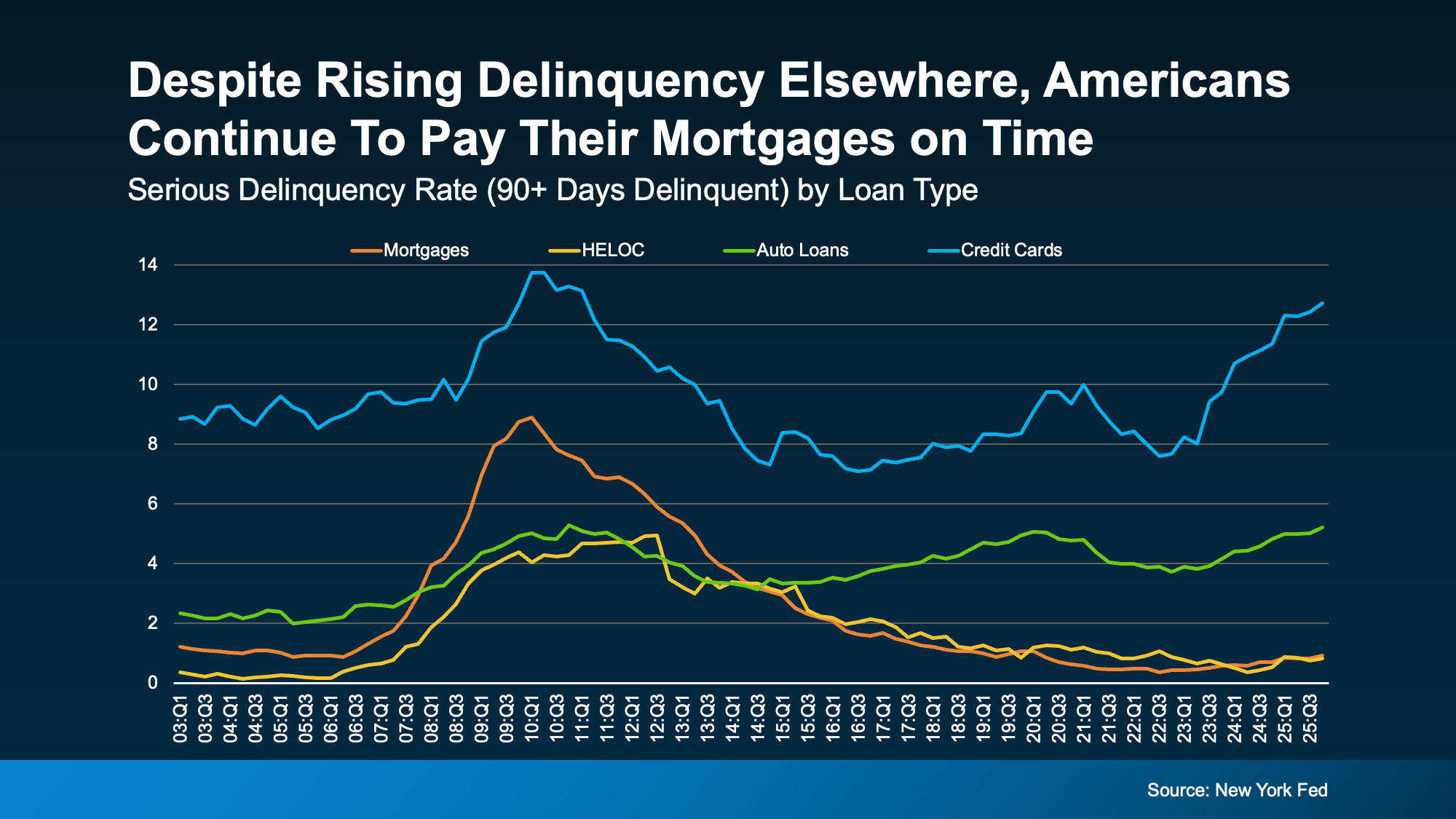
In other words, people may fall behind on other debts, but they fight hard to keep their homes. And, in today’s housing market, they’re also in a strong equity position to do so.
Home Equity Changes Everything
Another major difference between today’s market and the one in 2008 is home equity.
Over the past several years, homeowners across the country have built significant equity in their properties. Rising home values and consistent mortgage payments have created financial cushions for many households.
This means that even if a homeowner faces financial difficulties, they often still have options.
For example:
Selling the home before foreclosure
Using accumulated equity to pay off debt
Refinancing into more manageable loan terms
This flexibility is one of the biggest reasons we are not seeing foreclosure waves like those experienced during the housing crash.
For buyers, this stability supports confidence in the housing market.
Why Working With the Right Agent Matters
Buying a home can feel overwhelming, especially when headlines about foreclosures and market shifts create uncertainty.
That’s why it’s essential to compare real estate agents before starting your home search.
The right agent can help you:
Identify the best opportunities in the market
Understand pricing trends
Navigate negotiations and financing
Find the best neighborhoods for your needs
Experienced professionals, such as Robert Michael, help buyers understand local market conditions and identify valuable properties.
For example, buyers looking for a real estate agent in central florida often benefit from working with professionals who understand the region’s growth patterns, pricing trends, and community developments.
A knowledgeable agent ensures buyers make confident decisions based on real data instead of media headlines.
Opportunities for Buyers in Central Florida
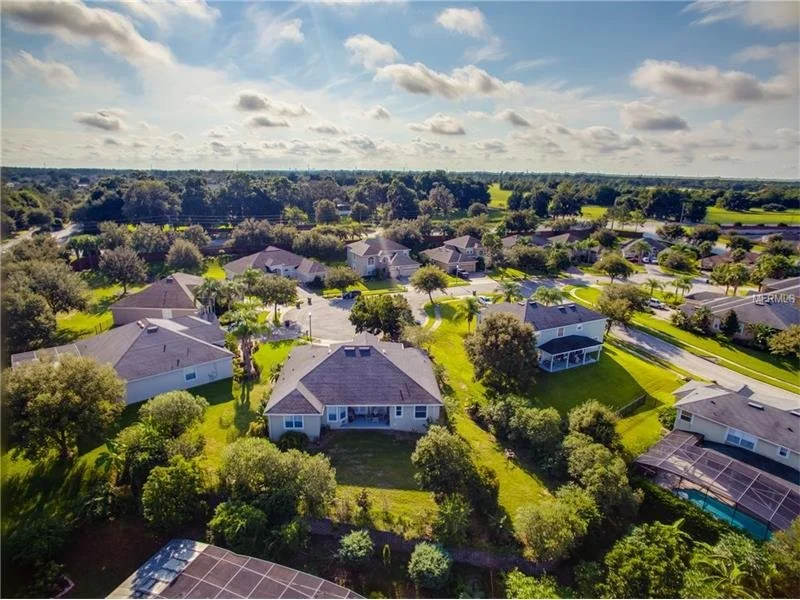
Central Florida continues to attract buyers thanks to its strong economy, growing population, and desirable lifestyle.
Some reasons buyers are drawn to this region include:
Warm climate year-round
Expanding job opportunities
Family-friendly communities
Proximity to major attractions and beaches
The availability of houses for sale central florida continues to grow as new developments expand across the region.
For buyers, this means more options when choosing the right property.
With the guidance of knowledgeable real estate agents in central florida, buyers can find homes that match their budget, lifestyle, and long-term goals.
What Buyers Should Focus on Instead of Foreclosure Headlines
While it’s natural to be curious about foreclosure trends, buyers should focus on factors that truly influence their purchasing decisions.
These include:
Affordability
Understanding mortgage payments, interest rates, and overall costs.
Location
Choosing a neighborhood with strong long-term value.
Market timing
Working with a knowledgeable agent to identify good opportunities.
Property condition
Ensuring the home meets your long-term needs.
By focusing on these elements rather than worrying about foreclosure headlines, buyers can make smarter and more confident real estate decisions.
Bottom Line
Are foreclosure filings rising slightly? Yes
.
But they are nowhere near the levels seen during the housing crash, and the data clearly shows we are not facing another 2008-style crisis.
Thanks to stronger lending standards, high homeowner equity, and effective foreclosure prevention options, the market remains far more stable today.
For buyers, this is actually encouraging news.
Instead of fearing a market crash, buyers should focus on finding the right home and working with trusted professionals who understand the local market.
If you're currently exploring houses for sale central florida, partnering with experienced professionals like Robert Michael and taking time to compare real estate agents can help you make confident decisions in today’s stable housing environment.
The reality is clear: the housing market remains strong, and informed buyers still have great opportunities ahead. 🏡