What Orlando Homeowners Need to Know About Rising Foreclosure Headlines in 2026
What the Foreclosure Headlines Aren’t Saying About Central Florida Real Estate
Foreclosure headlines are increasing across Florida, but the full story is more complex. Learn what Orlando homeowners, buyers, and investors should know about the Central Florida housing market, home equity, and opportunities in 2026.
Foreclosure headlines are making national news again, especially in Florida. Reports about rising foreclosure filings can sound alarming to homeowners and buyers alike. But if you live in Orlando or anywhere in Central Florida, it’s important to understand the bigger picture before assuming another housing crash is coming.
The reality is that today’s market conditions are very different from the 2008 housing crisis. While foreclosure activity has increased in some parts of the country, most homeowners still have strong equity, lending standards remain tighter than they were years ago, and demand for homes in Central Florida continues to attract buyers from across the nation.
Yes, foreclosure filings have increased 26% compared to last year, according to ATTOM, and they’ve now risen for five consecutive quarters. That’s a trend worth watching. But when you look at the broader context, the situation isn’t nearly as alarming as the headlines make it seem.
For homeowners, investors, and anyone searching for houses for sale Central Florida, understanding the local market is critical. Headlines often focus on fear, but experienced professionals know the details behind the numbers matter far more than the statistics themselves.
Why Foreclosure Numbers Are Increasing
Recent housing data shows foreclosure filings have risen across several states, with Florida ranking among the highest in the country. However, experts point out that current foreclosure activity is still significantly lower than the levels seen during the Great Recession.
Several factors are contributing to the increase:
Higher property insurance premiums in Florida
Rising property taxes
Elevated mortgage interest rates
Increased living costs
Slower home appreciation in some areas
These financial pressures are affecting some homeowners, particularly buyers who purchased at peak prices with limited savings. However, this does not necessarily indicate a widespread collapse in property values.
In fact, many homeowners in Orlando and surrounding communities still have substantial equity in their homes. Unlike the 2008 housing crisis, most homeowners today are not carrying risky adjustable-rate loans or zero-down mortgages.
Orlando’s Market Is Different From Many Other Cities
The Orlando housing market continues to benefit from long-term population growth, tourism expansion, and a strong job market. Central Florida remains one of the most desirable relocation destinations in the United States because of its climate, lifestyle, entertainment, and relative affordability compared to cities in the Northeast and West Coast.
Many buyers relocating to Orlando are still paying cash or bringing large amounts of equity from previous home sales. This demand continues to support the local housing market even as national headlines focus on foreclosure increases.
Additionally, Orlando’s rental market remains active due to tourism, universities, healthcare growth, and corporate expansion. Investors continue purchasing homes throughout Orange County, Seminole County, Osceola County, and Lake County because rental demand remains steady.
For buyers working with experienced real estate agents in Central Florida, opportunities still exist to find value in today’s market without waiting for dramatic price declines that may never happen.
What Homeowners Should Know Before Panicking
One of the biggest mistakes homeowners make is reacting emotionally to sensational news headlines. Foreclosure reports often sound worse than the actual conditions in local neighborhoods.
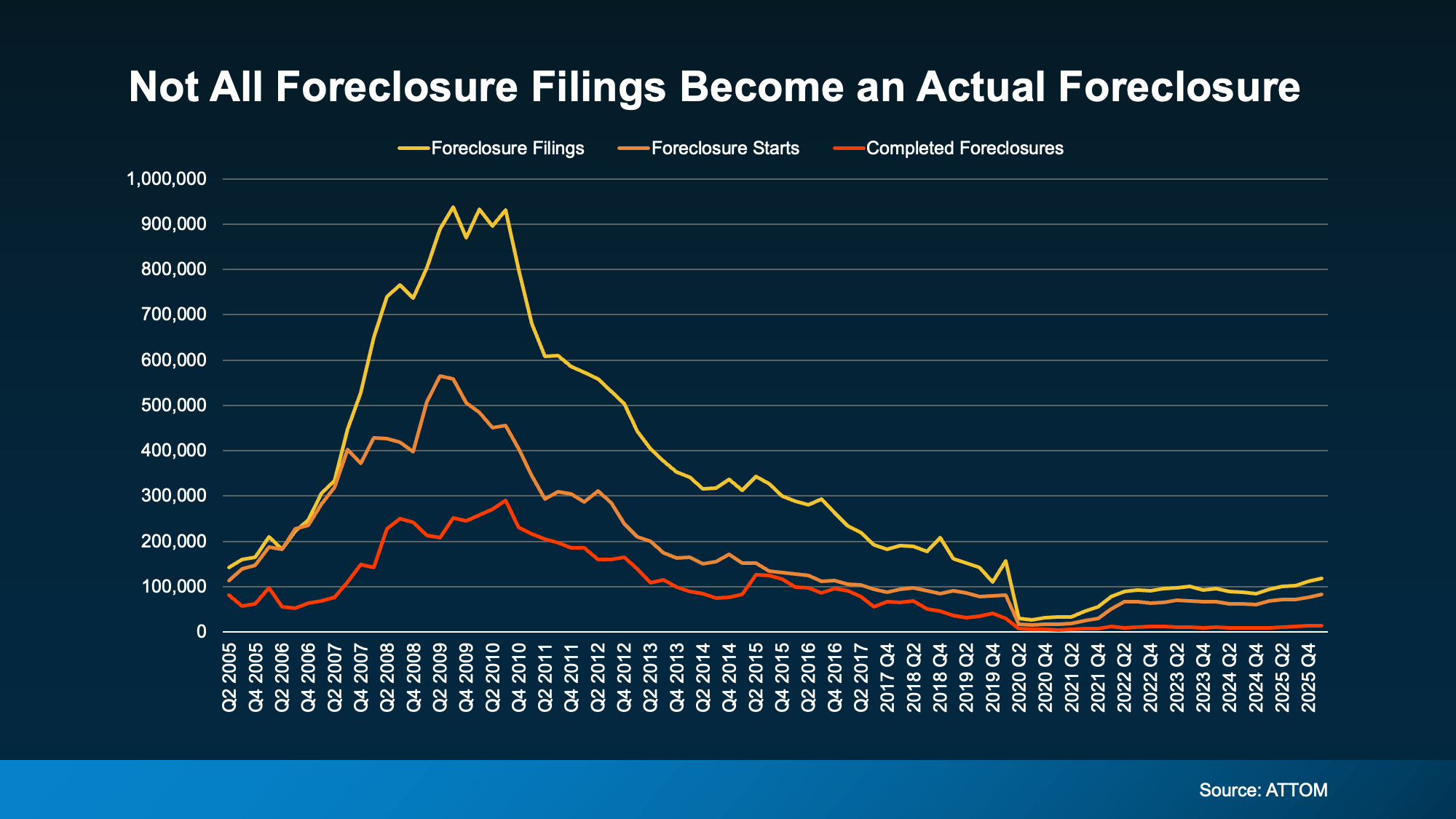
Instead, compare today’s market to 2017, 2018, and 2019 — the last years when conditions were truly normal. Current numbers are still below those levels, which means we haven’t even returned to a typical market yet. That’s why this shouldn’t be considered a crash. (See graph below.)
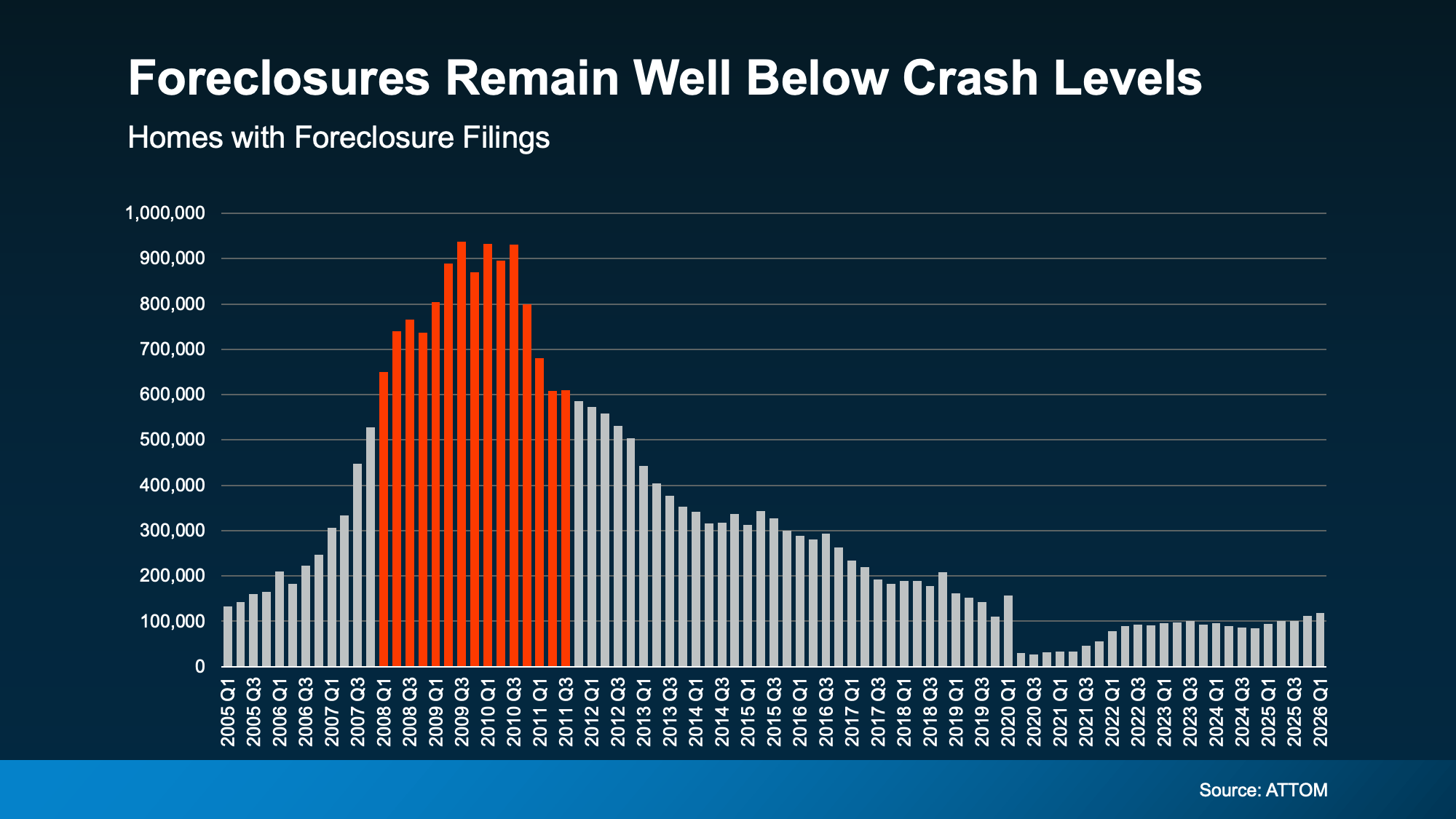
Take a look at the graph below, which shows foreclosure data from ATTOM dating back to 2005. Here’s a quick guide to reading it:
The yellow line represents all foreclosure filings.
The orange line shows foreclosure starts, meaning the foreclosure process has officially begun.
The red line at the bottom represents completed foreclosures — cases where homeowners ultimately lost their homes.
Here are a few important facts homeowners should remember:
1. Most Homeowners Still Have Equity
The average homeowner today is sitting on roughly $295,000 in home equity right now, according to Cotality. Back in 2008, many people owed more than their homes were worth. Selling wasn't an option. And foreclosure was often the only door available.
That equity provides options:
Refinancing
Selling before foreclosure
Loan modification negotiations
Renting the property temporarily
Check out the graph below. It shows foreclosure data from ATTOM going back to 2005.
2. Lending Standards Are Stronger
During the housing crash of 2008, lenders approved many borrowers without verifying income or financial stability. Today’s mortgage requirements are much stricter.
That means most current homeowners are financially stronger than borrowers during the previous crisis.
3. Orlando Demand Has Not Disappeared
Central Florida continues attracting:
Retirees
Military families
Remote workers
International buyers
Vacation home investors
This ongoing migration supports long-term housing demand across the region.
Opportunities for Buyers in Central Florida
Rising foreclosure activity can also create opportunities for buyers and investors who are financially prepared.
In some Orlando neighborhoods, buyers are beginning to see:
More inventory available
Longer days on market
Increased negotiating power
Seller concessions
Occasional discounted properties
For buyers searching houses for sale Central Florida, this shift may create a healthier and more balanced market compared to the extreme competition seen over the past several years.

However, buying distressed or foreclosure properties requires experience and local market knowledge. Some homes may need repairs, title work, or legal review before closing.
Working with a knowledgeable central florida realtor can help buyers avoid costly mistakes and identify properties with true investment potential.
The Importance of Local Expertise
Real estate is always local. National headlines cannot fully explain what’s happening in individual Orlando neighborhoods.
Some communities continue experiencing strong demand and rising values, while others may see slower sales activity or temporary price adjustments.
This is why buyers and sellers benefit from working with professionals who understand:
Local pricing trends
Neighborhood growth patterns
School districts
Investment opportunities
Off-market inventory
Foreclosure timelines in Florida
An experienced broker can also help homeowners avoid foreclosure by exploring alternatives before financial problems become severe.
Why Timing Matters in Real Estate Decisions
Waiting for the “perfect” market often causes buyers and sellers to miss opportunities.
Many people expected home prices in Orlando to crash dramatically over the past two years, but demand and population growth continued supporting the market.
At the same time, homeowners facing financial challenges should act early instead of delaying conversations with lenders or real estate professionals.
In many cases, proactive planning creates far better outcomes than waiting until foreclosure proceedings begin.
Central Florida Real Estate Outlook for 2026
While foreclosure activity may continue increasing modestly in Florida, most industry experts believe the market is experiencing normalization rather than collapse.
Several trends are likely to shape the Orlando market moving forward:
Stabilizing home prices
Increased housing inventory
More negotiation opportunities for buyers
Continued migration into Florida
Strong rental demand
Selective investor activity
For long-term homeowners and smart investors, Central Florida still represents one of the strongest real estate regions in the country.
Choosing the Right Real Estate Professional
Whether you’re buying, selling, investing, or trying to avoid foreclosure, having experienced guidance matters more than ever.
Meet Robert Michael Diaz – Broker Owner
Robert Michael Diaz is a trusted name in the Central Florida real estate industry with over 34 years of experience helping buyers, sellers, and investors navigate changing markets.
As a Multi-Billion Dollar Producer and Gulf War Veteran, Robert brings professionalism, integrity, and market expertise to every client relationship.
Whether you are searching for houses for sale Central Florida, exploring investment opportunities, or seeking guidance during financial hardship, Robert Michael & Co provides local insight backed by decades of experience.
With more than three decades of real estate experience, Robert Michael Diaz has helped buyers throughout Central Florida navigate changing markets and identify smart opportunities for homeownership.
Robert Michael Diaz
Broker - Owner | Multi-Billion Dollar Producer | 34 Years of Experience | Gulf War Veteran
Contact Information
Robert Michael & Co - Real Estate Team
618 E. South St. Ste 500
Orlando, FL 32801
Website: RobertMichael.com
Phone: 407-545-2272
Text: 941-676-9780
Email: Robert@robertmichael.com
Office Hours
Monday – Friday: 9:00 AM – 7:00 PM
Saturday: By Appointment Only