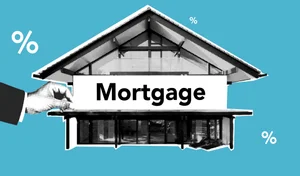
Mortgage rates are once again one of the most important factors influencing the Orlando housing market. But changing interest rates do not mean buyers and sellers should automatically stop making real estate decisions. They mean the strategy has to change.

For buyers, a mortgage interest rate can determine how much home they can comfortably afford. For sellers, rates can influence how many qualified buyers are able to purchase a property at a particular price. For existing homeowners, mortgage rates can also affect the decision to move, especially when the homeowner currently has a significantly lower rate on an existing mortgage.
Here in Orlando and throughout Central Florida, homes are still selling, buyers are still relocating, and homeowners are still making moves. What has changed is how carefully people are evaluating the complete cost of homeownership.
Buyers today are paying closer attention to the mortgage payment, property taxes, homeowners insurance, HOA fees, home condition, maintenance and the asking price. Sellers are discovering that successful pricing requires understanding not only comparable sales, but also what today's buyer can realistically afford.
Mortgage Rates Have Moved Higher Again
According to Freddie Mac's Primary Mortgage Market Survey, the average 30-year fixed mortgage rate was 7.03% for the week ending September 24, 2026. That was higher than 6.95% one week earlier and considerably higher than the 5.98% average reported in late February 2026.
The movement matters because a mortgage rate directly affects a buyer's monthly principal-and-interest payment. Even when a home's asking price remains exactly the same, the cost of financing that property can change.
What Different Rates Can Mean on a $400,000 Mortgage
| 30-Year Rate | Approx. Monthly P&I | Difference vs. 6.5% |
|---|---|---|
| 6.50% | $2,528 | Baseline |
| 7.03% | $2,669 | +$141 / month |
| 7.50% | $2,797 | +$269 / month |
These examples are estimates for principal and interest only. Property taxes, homeowners insurance, HOA fees, mortgage insurance and other expenses are not included. Actual rates and payments vary according to the borrower, lender, loan program, credit profile, points and property.
A buyer may still love the same $450,000 house, but the monthly cost of owning that property can change even when the asking price does not. That is why today's home search should begin with a comfortable monthly housing budget rather than simply a maximum purchase price.
What Is Happening in the Orlando Housing Market?
Mortgage rates are only one part of the Central Florida real estate story. The latest local housing statistics provide important context for buyers and sellers.
According to the Orlando Regional REALTOR® Association housing market report, the Orlando-area median home price was approximately $400,676 in August 2026. Homes spent an average of 64 days on the market, available inventory totaled approximately 12,144 properties, and the market had roughly 4.9 months of supply.
Closed residential sales declined from 2,720 in July to 2,478 in August. The numbers point to a market where many buyers have more time and more choices than they experienced during the extreme seller's markets of several years ago.
That does not mean every home is difficult to sell. Attractive homes that are correctly priced, properly presented and located in desirable communities can still generate significant buyer interest.
A $300,000 home in Kissimmee can behave very differently from an $800,000 home in Windermere. A new home in St. Cloud may compete against builder incentives, while a resale property in Winter Park may face a completely different set of comparable sales. Neighborhood, price range, property type and condition all matter.
Orlando Continues to Grow — and That Matters for Housing
Mortgage rates can influence short-term housing activity, but Central Florida also has long-term forces influencing housing demand.
According to the U.S. Census Bureau's metropolitan population estimates, the Orlando-Kissimmee-Sanford metropolitan area continued adding residents, reinforcing Central Florida's position as one of the country's important growth markets.
Population growth does not guarantee that every property will appreciate, and it does not eliminate affordability challenges. However, it helps explain why Orlando housing demand cannot be evaluated by mortgage rates alone.
People continue moving to Central Florida for employment, family, retirement, lifestyle, education and investment reasons. Some buyers need to purchase regardless of whether mortgage rates are 6%, 7% or something different.
What Higher Mortgage Rates Mean for Orlando Home Buyers
Today's buyer should begin the home search by understanding monthly affordability, not simply the highest purchase price shown on a mortgage preapproval.
A lender may determine that a buyer qualifies for a $500,000 home, but that does not automatically mean the buyer will be comfortable carrying the monthly cost associated with that purchase.
A knowledgeable lender can estimate the complete monthly housing expense, including principal, interest, property taxes, homeowners insurance, HOA fees when applicable, mortgage insurance and other relevant expenses.
Once the buyer knows the monthly payment that feels comfortable, an experienced Realtor can narrow the search to properties that make financial sense rather than simply showing homes at the maximum approval amount.
For consumers searching for houses for sale in Central Florida , this approach can make the entire home search more productive.
Buyers May Have More Negotiating Options
Higher mortgage rates create affordability challenges, but a more selective market can also create negotiating opportunities.
When a property has been on the market longer, certain sellers may become more open to discussing closing-cost contributions, repairs, financing incentives or other terms that can help the transaction come together.
New-home builders may also offer financing incentives on selected inventory. Buyers should compare the entire transaction rather than focusing only on asking price.
A home priced slightly higher with meaningful seller assistance could potentially be a better financial fit than a lower-priced property offering no concessions. The lender should calculate the actual payment and cash-to-close effect before a buyer decides which structure works best.
The Interest Rate Matters — But So Does the Property
A favorable mortgage rate does not turn the wrong property into the right property.
Buyers should still carefully evaluate location, condition, homeowners insurance availability, roof age, HVAC condition, potential maintenance, HOA obligations, flood-zone considerations and future resale potential.
Central Florida has an extremely diverse housing inventory. Buyers may be comparing established neighborhoods in Orlando, Kissimmee, Winter Park and Altamonte Springs with newer communities in St. Cloud, Clermont, Davenport, Groveland, Winter Garden and other rapidly developing areas.
A new-construction property might offer a builder financing incentive but have higher community fees. An established resale property may offer a larger lot and mature neighborhood but require future roof, HVAC or plumbing improvements.
That is one area where experienced real estate agents in Central Florida can provide substantial value.
What Higher Interest Rates Mean for Orlando Home Sellers
Sellers need to understand the buyer's side of the transaction. Imagine that comparable sales indicate a property could reasonably be marketed around $450,000.
The seller is not only competing against other properties priced near $450,000. The seller is also competing against the buyer's monthly payment.
If mortgage rates rise while the asking price remains the same, the home becomes more expensive for a financed buyer even though the property's advertised price never changed.
That is why pricing correctly from the beginning becomes increasingly important when affordability is tight.
In a slower market, an overpriced property can accumulate days on market while correctly positioned competing homes attract buyers. Eventually reducing the price may help, but buyers can also begin questioning why a property has remained available for an extended period.
Price Reductions Are Not the Only Tool Sellers Have
When buyer activity is limited, sellers often assume the immediate answer is a large price reduction. Sometimes that is exactly what the market requires.
But depending on the buyer's financing, seller-paid closing costs or other permitted concessions may sometimes address the buyer's actual obstacle more efficiently.
If the buyer's primary issue is cash needed at closing or monthly affordability, an appropriately structured concession may help solve the problem while allowing the seller to protect other transaction objectives.
Before automatically reducing a property's price, ask the buyer's lender to calculate the difference between a lower price and a permitted seller contribution toward financing or closing costs. Loan-program limits and borrower qualifications vary, so the actual numbers matter.
Should Orlando Buyers Wait for Interest Rates to Come Down?
No one can know with certainty where mortgage rates will be six months or a year from now.
Rates could decline, remain around current levels, or move higher. Trying to perfectly time both mortgage rates and home prices is therefore extremely difficult.
If mortgage rates decline materially, affordability could improve. But lower rates could also encourage additional buyers to return to the market, potentially increasing competition for desirable homes.
If rates remain elevated, certain buyers may continue benefiting from more negotiating flexibility on homes that are taking longer to sell.
Instead of asking only, "Will mortgage rates be lower next year?" ask, "Can I comfortably afford the right property under today's numbers?" If the answer is yes, there may be reasons to move forward. If the answer is no, strengthening savings, credit or income may be the better strategy.
For another look at the changing dynamics of today's market, read our analysis: The Central Florida Housing Market Isn't Just One Market Anymore — It's Four .
Should Orlando Sellers Wait for Mortgage Rates to Fall?
Sellers face a similar timing question.
A homeowner may believe waiting for lower mortgage rates will automatically result in a higher sales price. That is possible, but it is not guaranteed.
Future inventory, competing listings, employment conditions, insurance costs, new construction and neighborhood-specific demand can all influence property values.
Homeowners also move for reasons unrelated to interest rates: relocation, retirement, inheritance, divorce, downsizing, upsizing, investment decisions and family changes.
The better strategy is to determine what a property could realistically sell for today, estimate potential seller proceeds, review current competition and expected marketing time, and compare that information with the homeowner's goals.
Central Florida Is Not One Housing Market
One of the biggest mistakes buyers and sellers can make is relying too heavily on national real estate headlines.
Even within Central Florida, housing conditions can differ between Orange, Seminole, Osceola, Lake and Polk counties. They can also differ dramatically between ZIP codes within the same county.
Property type matters as well. Single-family homes, condominiums, townhomes, vacation rentals, investment properties, new construction and luxury homes do not necessarily experience the same supply, demand or negotiation environment.
Florida Realtors' statewide housing data has also shown why it is important to avoid assuming that slower sales automatically mean an oversupplied market. For statewide context, review Florida Realtors' August 2026 housing market report.
Consumers should use recent neighborhood-level comparable sales and current competition when evaluating an individual property rather than relying only on a statewide or national headline.
Why Local Experience Matters More in a Changing Market
Extremely fast housing markets can sometimes hide mistakes. When demand is unusually strong, an overpriced listing might still receive offers, and buyers may overlook issues because they are afraid of losing the property.
More balanced and payment-sensitive markets operate differently. Pricing, negotiation, financing knowledge, marketing, follow-up and local experience become much more important.
For consumers researching a Central Florida Realtor Robert Michael, Robert Michael & Co. Real Estate Team helps buyers, sellers and investors evaluate opportunities throughout Orlando and Central Florida using neighborhood-specific market information and transaction strategy.
The role of a Realtor today is not simply to place a property in the MLS or unlock doors for buyers. It is to interpret the market and help the client apply the information to a specific property and transaction.
Sellers need to understand competing inventory, comparable sales, buyer behavior and pricing. Buyers need to understand financing, property condition, total monthly cost, negotiation opportunities and long-term suitability.
You can also read our related article, Central Florida Housing Market: Negotiation Is Back in 2026 , for more information about today's changing negotiation environment.
Frequently Asked Questions About Orlando Mortgage Rates
Mortgage rates are primarily influenced by national mortgage and financial markets rather than being established separately by the State of Florida. A borrower's actual rate can vary depending on credit, loan program, property type, down payment, points and lender.
It can. On larger mortgage balances, a one-percentage-point difference can change principal-and-interest payments by hundreds of dollars per month. The impact depends on the loan amount, mortgage term and specific interest rate.
Yes. Buyers continue purchasing homes throughout Orlando and Central Florida, although affordability can affect buyer behavior, purchase price and negotiation. ORRA reported 2,478 residential sales during August 2026.
There is no universal answer. Buyers should consider budget, financing, expected ownership period and housing needs. Sellers should evaluate equity, property condition, local competition, neighborhood sales and future plans. A local analysis is more useful than trying to time the market from national headlines.
Interest Rates Matter — But They Do Not Define the Entire Market
Mortgage rates influence purchasing power, monthly payments, buyer demand and negotiation. But they are not the only force shaping the Orlando housing market.
Central Florida continues to attract residents. Homes continue to sell. Buyers still need housing, investors continue evaluating opportunities, and homeowners continue moving for reasons that have nothing to do with financial-market headlines.
The difference in 2026 is that buyers and sellers need to be more strategic.
Buyers should understand the complete monthly cost of owning a home before deciding how much to purchase. Sellers should understand how their asking price translates into the buyer's payment and how their property compares with current competition.
Both sides benefit from analyzing local information rather than relying on generalized national headlines.
If you are searching for houses for sale Central Florida, considering selling a home in Orlando, or simply trying to determine what changing mortgage rates mean for your situation, the next step should be a property-specific analysis based on your goals.
Mortgage Rates: Freddie Mac Primary Mortgage Market Survey
Orlando Housing Statistics: Orlando Regional REALTOR® Association Housing Market Report
Central Florida Population: U.S. Census Bureau Metropolitan Population Estimates
Florida Housing Market: Florida Realtors August 2026 Market Report
Mortgage payment examples are illustrative only and are not a loan offer or financing quote. Rates and lending terms vary.
What Does Today's Market Mean for Your Home?
Whether you're considering buying, selling, relocating or investing, your decision should be based on your property, neighborhood, financing and goals—not a national headline.
Contact Robert Michael & Co. for a personalized Central Florida real estate consultation, buyer strategy or property market analysis.
Robert Michael Diaz Broker-Owner • Robert Michael & Co. Real Estate TeamServing Orlando & Central Florida
Robert Michael & Co. Real Estate Team
618 E. South St., Suite 500 • Orlando, FL 32801
RobertMichael.com