

Central Florida Housing Market: Negotiation Is Back in 2026
Central Florida buyers have more negotiating power in 2026. Explore Orlando housing trends, seller concessions, builder incentives, ZIP-code data, and strategies for buyers and sellers.
Central Florida Real Estate Is Becoming More Negotiable: What Buyers and Sellers Need To Know in 2026
For several years, buying a home often felt like a competition rather than a negotiation. Buyers regularly worried about multiple offers, short decision windows, waived contingencies, and sellers who had little reason to compromise.
That environment has changed.
Central Florida real estate remains active, and desirable homes can absolutely attract strong competition. But buyers now have something they often lacked during the hottest years of the market: options.
Homes are spending more time on the market, affordability continues to influence purchasing decisions, and sellers are increasingly willing to discuss closing costs, repairs, mortgage-rate assistance, and other terms that can help a transaction come together.
This does not mean every home in Orlando, Winter Park, Lake Nona, Winter Garden, Oviedo, Sanford, or Windermere has suddenly become a bargain. It means the market has become more dependent on the individual property, ZIP code, price range, condition, and seller motivation.
For both buyers and sellers, understanding that distinction could be one of the most important real estate advantages in 2026.
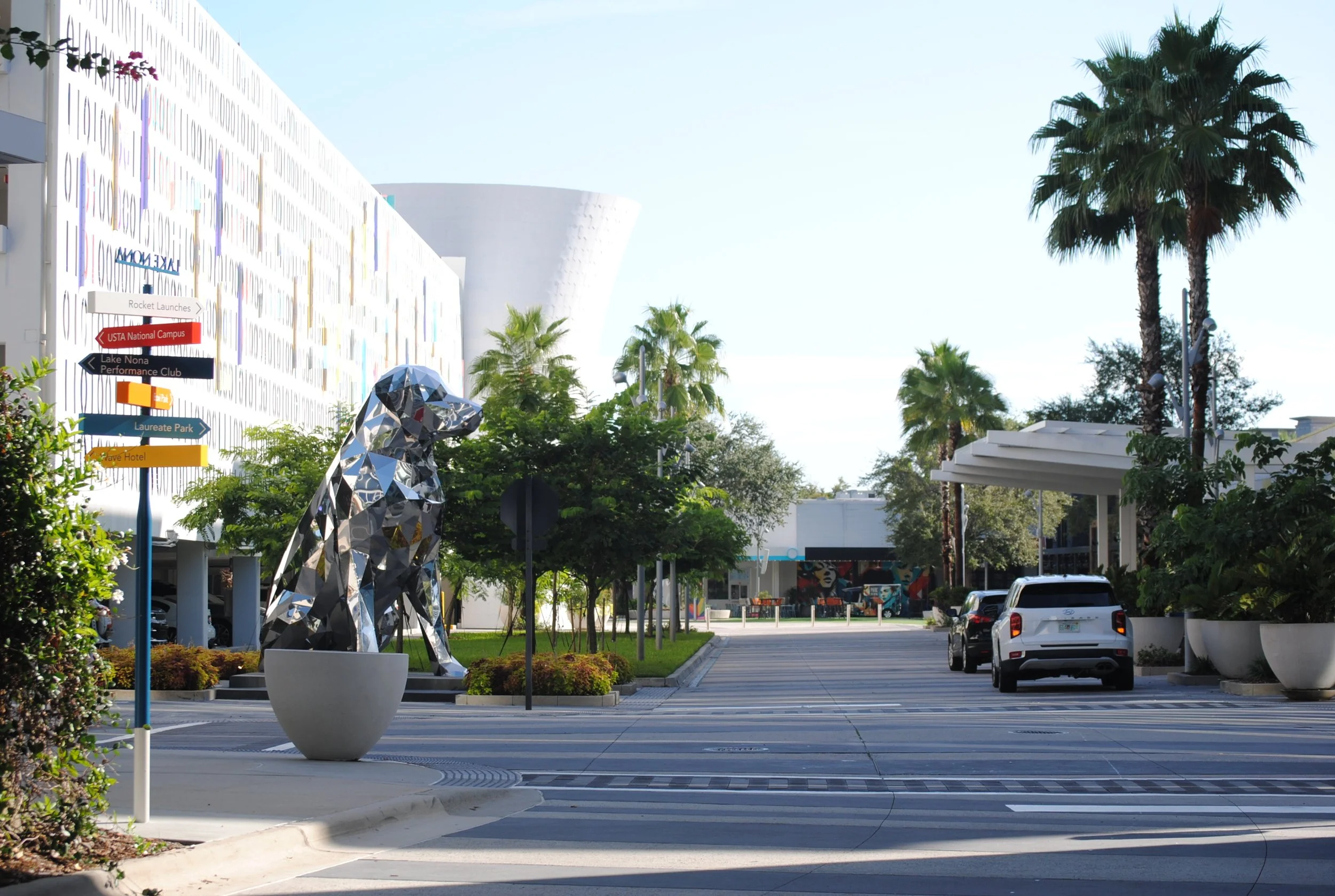
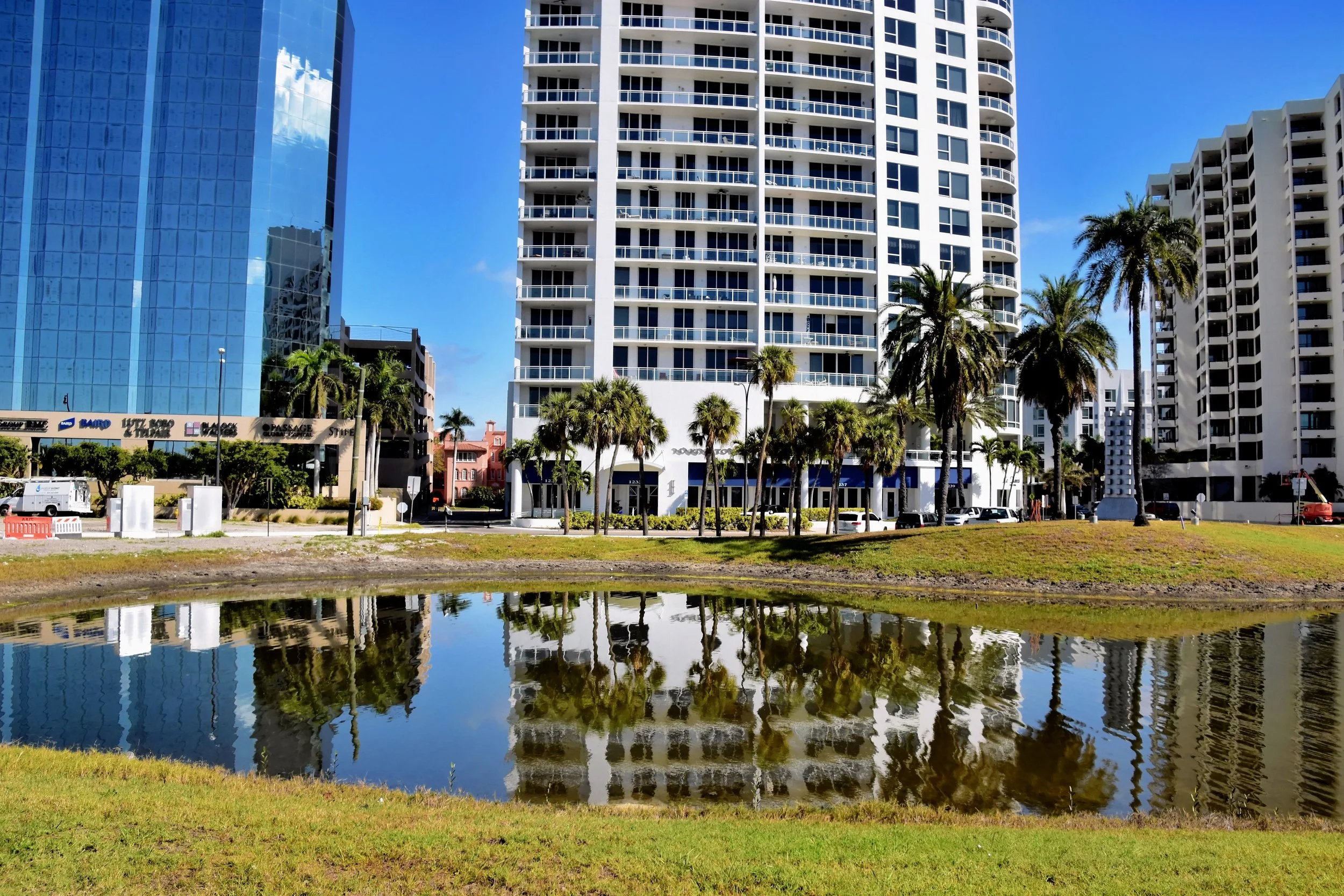
Image: Lake Nona Town Center, Orlando. Photo by PoultrySaga, licensed CC BY-SA 4.0. View image source and license on Wikimedia Commons.
The Orlando Housing Market Is Shifting Toward More Give-and-Take
One of the clearest signs of a changing market is not necessarily a dramatic decline in home values. It is the return of meaningful negotiation.
According to the Orlando Regional REALTOR® Association's July 2026 housing market report, the Orlando-area median home price was $410,494 in July 2026, compared with $416,308 in June. Homes spent an average of 64 days on the market, while available housing represented approximately 4.4 months of supply, up from 4.2 months in June.
Those numbers are important because a market does not have to become a full buyer's market before buyers gain leverage.
ORRA also reported that 68% of REALTORS® surveyed were seeing more seller concessions than a year earlier. That is a meaningful local indicator that negotiating has become a larger part of getting deals closed in Central Florida.
In practical terms, buyers may have opportunities to discuss more than the purchase price. Depending on the property and financing, negotiations might involve closing-cost assistance, inspection-related credits, repairs, appliance inclusion, a mortgage-rate buydown, or adjustments to the closing timeline.
The key word is may. A renovated home priced correctly in a highly desirable neighborhood can behave very differently from an overpriced property that has been sitting for two months.
Orlando Sellers Are Offering Concessions at a Much Higher Rate
The shift becomes even clearer when Orlando is compared with national concession trends.
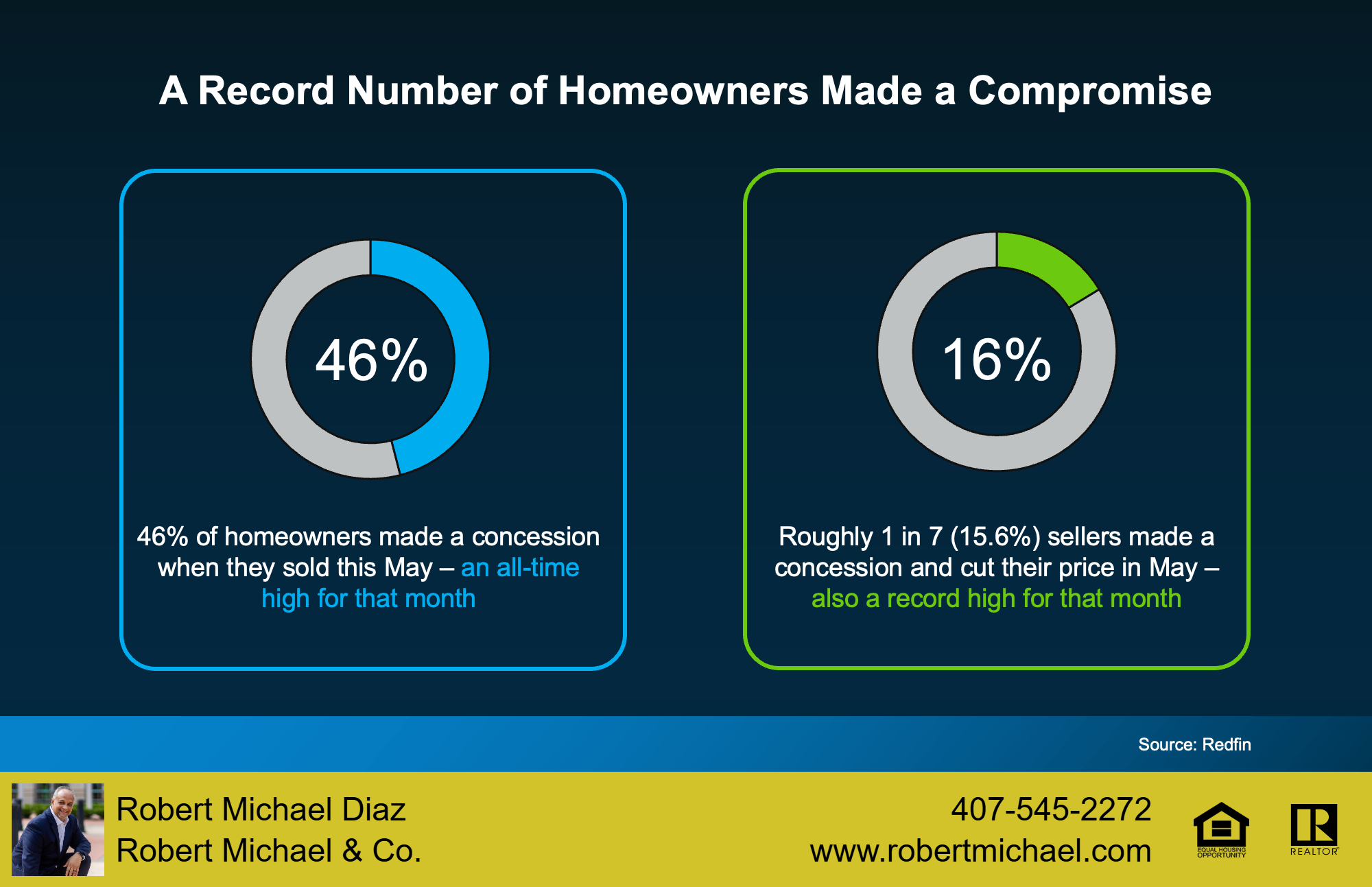
A Redfin analysis of seller concessions found that 46.2% of U.S. home sales during the three months ending May 2026 included a seller concession. Orlando stood out even more: 58.6% of Orlando sellers in Redfin's analysis provided a concession, compared with 38.3% a year earlier.
That does not automatically mean buyers should submit extremely low offers.
In many cases, the better strategy is to look at the buyer's total cost of ownership.
Consider a buyer who likes a house but is concerned about cash needed for closing or the monthly mortgage payment. A seller contribution toward allowable closing costs or a temporary or permanent interest-rate buydown could potentially be more valuable to that buyer than a similar reduction in purchase price.
Likewise, after an inspection identifies an aging roof, HVAC system, plumbing concern, or another material issue, a credit or negotiated repair could make the difference between a deal closing and the buyer walking away.
This is where today's Central Florida real estate market is different from the frenzy of earlier years: asking a reasonable question is far less likely to automatically eliminate a buyer from consideration.
New Construction Is Adding Another Layer of Competition
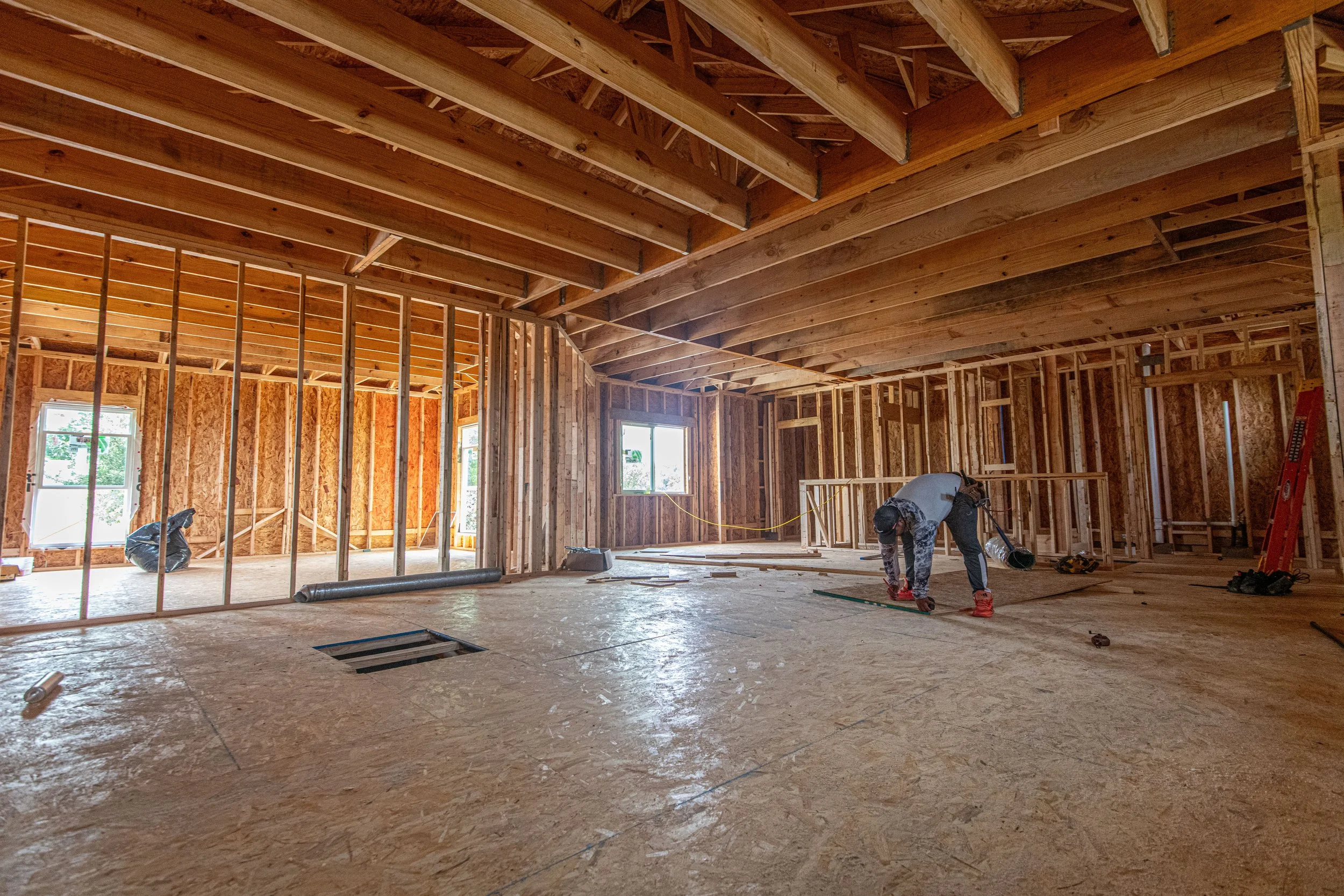
Existing-home sellers are not only competing against other resale properties. In many parts of Central Florida, they may also be competing against homebuilders.
That matters in communities with significant new construction, including areas surrounding Lake Nona, Horizon West, Winter Garden, Clermont, Kissimmee, Sanford, Apopka, and other growth corridors.
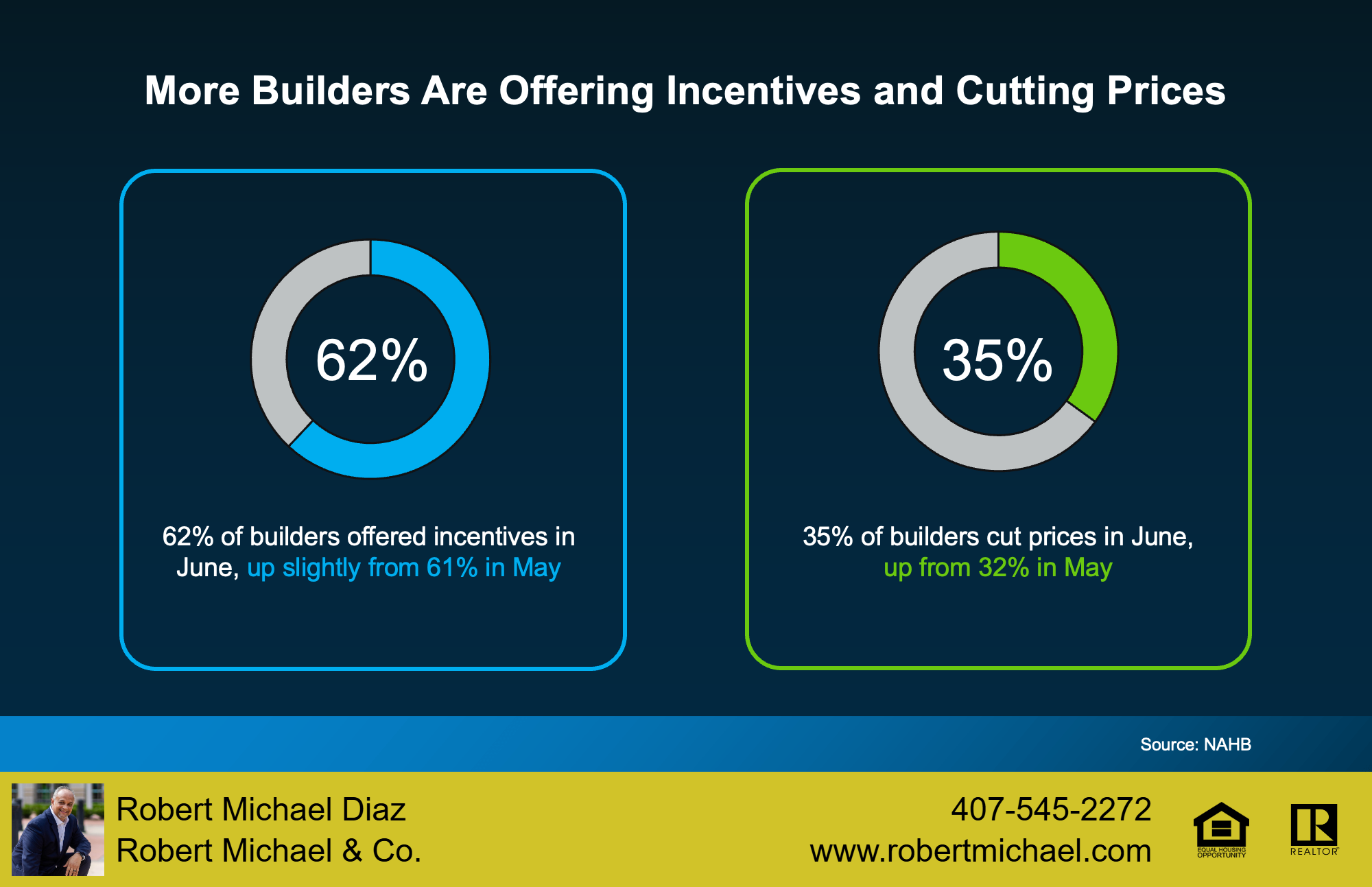
The National Association of Home Builders reported in July 2026 that 63% of surveyed builders were using sales incentives, while 37% had reduced prices. The average reported price reduction among builders cutting prices was 6%.
Builder incentives can take several forms, including financing incentives, closing-cost contributions, design upgrades, appliance packages, lot premiums, or price adjustments.
For resale sellers, this creates an important pricing lesson. A buyer comparing a five-year-old home with a brand-new home is not necessarily comparing only two asking prices. They may also be comparing interest-rate offers, warranties, repair expectations, insurance considerations, closing expenses, HOA or CDD obligations, and the amount of cash required at closing.
A resale property can still have advantages—location, lot size, maturity of the neighborhood, completed improvements, established landscaping, or fewer construction-related disruptions—but the entire package needs to make sense.
Central Florida Real Estate Is Hyperlocal—Sometimes Down to the ZIP Code
There is no single "Central Florida housing market."
A home in Winter Park does not compete in exactly the same market as a home in Meadow Woods. A Lake Nona buyer may have different alternatives than a Sanford buyer. Luxury buyers in Windermere often behave differently from first-time buyers searching in a more affordability-sensitive price bracket.
That is why ZIP-code information matters.
The Orlando Regional REALTOR® Association's ZIP Code Sales Detail report provides sales data for Orange and Seminole County ZIP codes. The following figures represent average sale prices for the first quarter of 2026, rather than current asking prices or median values.
| Central Florida ZIP Code | Area Identified by ORRA | Q1 2026 Average Sale Price |
|---|---|---|
| 32801 | Orlando | $370,533 |
| 32803 | Colonialtown | $525,834 |
| 32806 | Delaney Park / Crystal Lake | $477,519 |
| 32819 | Bay Hill / Sand Lake | $625,478 |
| 32824 | Taft / Meadow Woods | $413,518 |
| 32827 | Airport / Alafaya / Lake Nona | $855,732 |
| 32789 | Winter Park | $1,107,935 |
| 34786 | Windermere | $1,013,603 |
| 34787 | Winter Garden / Oakland | $706,616 |
| 32746 | Lake Mary / Heathrow | $546,058 |
| 32765 | Oviedo | $515,458 |
| 32771 | Sanford / Lake Forest | $525,792 |
| 32773 | Sanford | $338,913 |
Source: Orlando Regional REALTOR® Association (ORRA) ZIP Code Sales Detail . Figures shown are Q1 2026 average sale prices and should not be interpreted as estimates of an individual property's value.
These averages should not be treated as estimates of what a particular home is worth. Individual ZIP codes can contain everything from condos and townhomes to waterfront property, custom homes, gated communities, older neighborhoods, and new construction.
Instead, the data highlights why local analysis is so important.
For example, negotiation strategy on a million-dollar property in 32789 Winter Park or 34786 Windermere may revolve around condition, luxury upgrades, inspection findings, timing, or comparable high-end sales. An affordability-focused buyer in 32773 Sanford may place greater importance on closing costs, insurance, monthly payment, and financing assistance.
The ZIP code establishes context. The actual property establishes leverage.
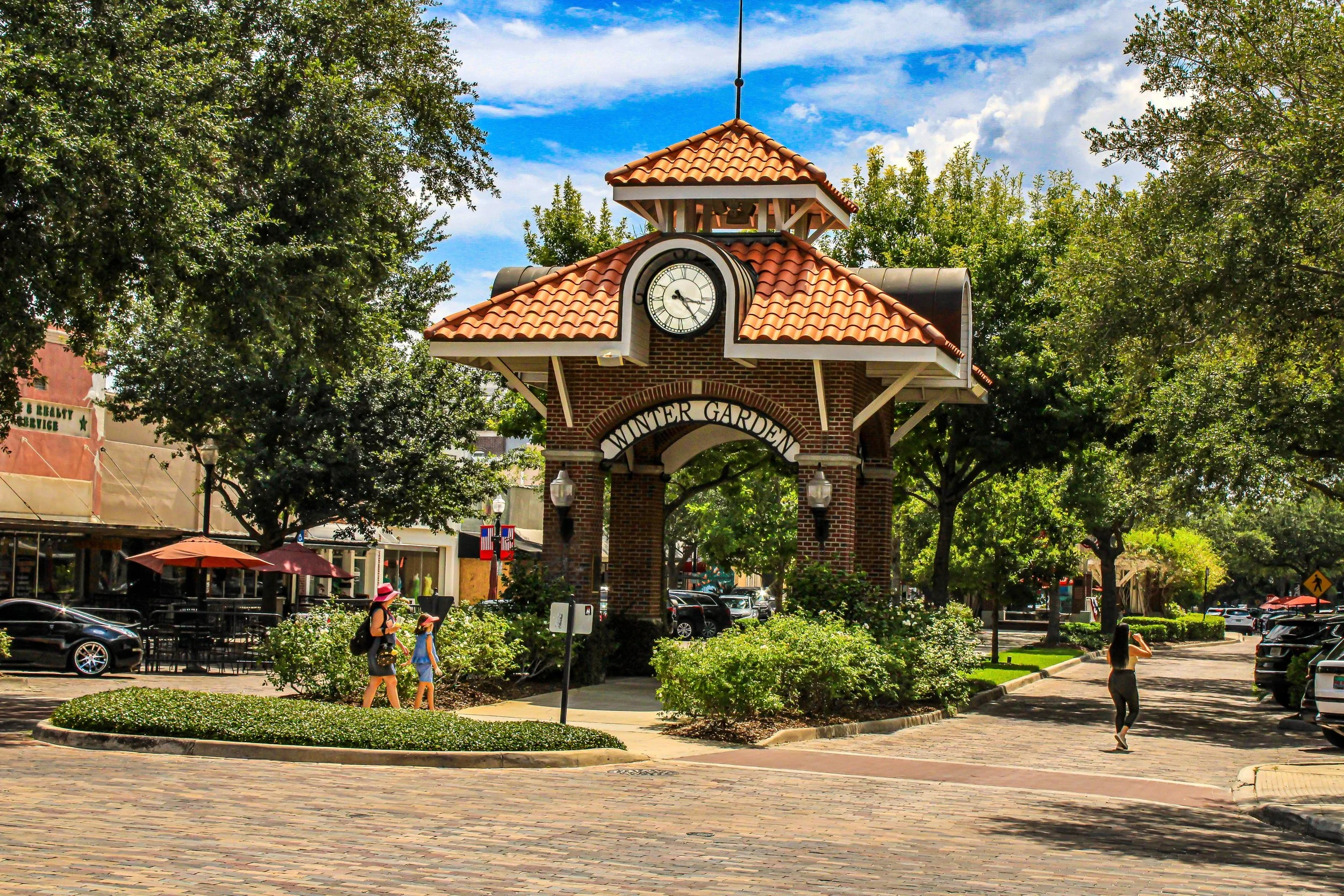
Image: Plant Street in Downtown Winter Garden. Photo by Freeholdman12, licensed CC BY 4.0. View image source and license on Wikimedia Commons.
Buyers Have More Leverage, but the Best Homes Can Still Move Quickly
One mistake buyers can make in a changing market is assuming that every seller is desperate.
That is not the case.
Redfin described Orlando as a somewhat competitive market, with homes selling for roughly 3% below list price on average during its recent reporting period. It also noted that especially desirable "hot" properties could still sell around asking price and move considerably faster than the broader market. See Redfin's Orlando housing-market data here.
Therefore, a buyer's strongest strategy is usually evidence-based rather than aggressive for the sake of being aggressive.
A property that has been listed for 70 days, already experienced a price reduction, and needs a new roof presents a different negotiating opportunity from a beautifully renovated home that hit the market yesterday at a competitive price.
Before deciding what to ask for, buyers should examine comparable sales, listing history, days on market, competing inventory, property condition, insurance considerations, HOA or CDD expenses when applicable, and the seller's known timeline.
The goal is not simply to "win" a negotiation. The goal is to structure a purchase that makes financial sense.
Sellers Need Flexibility—Not Panic
A more negotiable market does not mean homeowners should immediately slash their prices or agree to every buyer request.
It does mean sellers need to recognize that the market is rewarding preparation and realistic pricing.
Overpricing a Central Florida property can create a difficult cycle. The home receives less attention during its initial launch, days on market accumulate, buyers begin wondering why it has not sold, and the eventual conversation may become focused on both a price reduction and additional concessions.
A stronger strategy is to evaluate recently closed comparable properties rather than relying exclusively on what neighboring homeowners are currently asking.
Sellers should also decide before listing which terms matter most.
For one homeowner, protecting the sale price may be the priority, making a closing-cost credit easier to accept. Another seller may prefer a lower price rather than completing repairs. Someone relocating for work may value a fast, predictable closing more than squeezing every possible dollar from the transaction.
Negotiation works best when the seller knows in advance where flexibility exists.
Mortgage Rates Make Concessions More Important
Affordability remains one of the biggest forces influencing homebuyer behavior.
As of August 13, 2026, the average 30-year fixed mortgage rate was 6.67%, according to Freddie Mac's Primary Mortgage Market Survey.
At rates in this range, buyers are frequently focused on monthly payment—not simply purchase price.
That is why concessions involving closing costs or mortgage-rate buydowns can attract attention. Depending on the loan program, lender requirements, appraisal, and contractual structure, allocating money toward the buyer's financing expenses may have a different short-term financial effect than reducing the home's price by the same dollar amount.
Buyers should have their lender calculate the options before deciding which structure provides the greatest benefit.
What Should Central Florida Buyers Ask For in 2026?

Today's market makes it reasonable to investigate several possibilities, but the request should match the property.
A buyer might negotiate the purchase price, ask for allowable closing-cost assistance, request repairs after an inspection, negotiate a repair credit, discuss mortgage-rate buydown assistance, request that certain appliances remain, or propose a closing date that benefits both sides.
The smartest offer is not necessarily the offer containing the largest number of requests. It is the one designed around the buyer's priorities while remaining attractive enough for the seller to accept.
That balance becomes especially important in ZIP codes where well-priced inventory still receives quick attention.
Is Central Florida Officially a Buyer's Market?
Not necessarily—and that distinction matters.
ORRA reported 4.4 months of housing supply in July 2026 and identifies six months as a benchmark for a balanced market. At the same time, the association reported longer marketing times and substantially more agents seeing seller concessions than a year earlier.
In other words, buyers can have increased negotiating power even when the overall market has not crossed a technical threshold into a traditional buyer's market.
The most useful question is therefore not, "Is Central Florida a buyer's market?"
A better question is: How much leverage does the buyer have on this particular property?
Are Builder Incentives Always Better Than a Resale-Home Concession?
No. The value has to be calculated.
A builder may advertise an attractive interest rate that requires using an affiliated lender or meeting specific financing conditions. A resale seller may offer a closing credit with different restrictions. One property may have higher HOA or CDD obligations, while another may require repairs sooner.
Comparing only the advertised price can therefore be misleading.
Buyers should compare their estimated cash to close, projected monthly payment, taxes, insurance, HOA/CDD expenses, potential repair costs, warranties, lender terms, and long-term ownership plans.
What This Market Shift Really Means for Central Florida
The biggest change in the 2026 Central Florida housing market is not that buyers suddenly control every transaction or that sellers have lost their ability to command strong prices.
The change is that negotiation matters again.
Current Orlando-area data shows homes taking longer to sell, months of supply moving upward, and seller concessions becoming more common. Nationally, builders are also using incentives extensively as they compete for affordability-conscious buyers.
For buyers, that creates an opportunity to evaluate the entire deal rather than focusing exclusively on list price.
For sellers, it means pricing, presentation, condition, and flexibility matter more than they did when buyers had few alternatives.
And for anyone considering a move in 32801, 32803, 32806, 32819, 32824, 32827, 32789, 34786, 34787, 32746, 32765, 32771, 32773, or another Central Florida ZIP code, the most valuable information will usually come from analyzing the immediate neighborhood and competing properties—not relying solely on national housing headlines.
Central Florida remains a collection of highly localized real estate markets. Knowing when to negotiate, what to request, what to concede, and when to move quickly can make a meaningful difference in the final outcome.






.jpg)