
Why Lower Home Asking Prices Are Creating New Opportunities for Orlando Home Buyers
Discover how lower home asking prices are benefiting Orlando buyers in 2026. Learn what price reductions mean, where to find opportunities, and how to navigate Orlando's evolving real estate market.
The Orlando housing market is evolving, creating favorable conditions for buyers who may have felt sidelined during the competitive real estate environment of recent years. As more homes enter the market and sellers adjust to changing buyer expectations, lower asking prices are becoming increasingly common across many Orlando neighborhoods. For prospective homeowners, this shift represents more than just a reduced listing price—it signals new opportunities to find a home that fits both lifestyle needs and financial goals.
For several years, buyers throughout Central Florida faced intense competition, multiple-offer situations, and rapidly increasing home values. Many properties sold above asking price within days of being listed, leaving little room for negotiation. Today, the landscape looks different. Sellers are becoming more realistic about pricing, and buyers are benefiting from a market that offers greater flexibility and choice.
Understanding Why Asking Prices Are Decreasing
A lower asking price does not necessarily indicate a decline in a property's value. In many cases, sellers initially price their homes based on past market conditions and later adjust those prices to align with current demand. As inventory levels rise and buyers become more selective, pricing strategies have shifted accordingly.
Many Orlando-area homeowners who listed properties expecting the same rapid sales activity seen during previous years are now finding that buyers have more options. When homes remain on the market longer than anticipated, sellers often reduce their asking price to attract attention and generate renewed interest.
This trend can create opportunities for buyers who are willing to conduct thorough research and evaluate properties based on long-term value rather than simply focusing on the original listing price.
More Inventory Means More Choices for Buyers
One of the most significant changes in today's Orlando real estate market is the increased availability of homes. During the peak of the seller's market, buyers frequently had to make quick decisions without adequate time to compare properties or conduct detailed inspections. The current environment offers a more balanced experience.
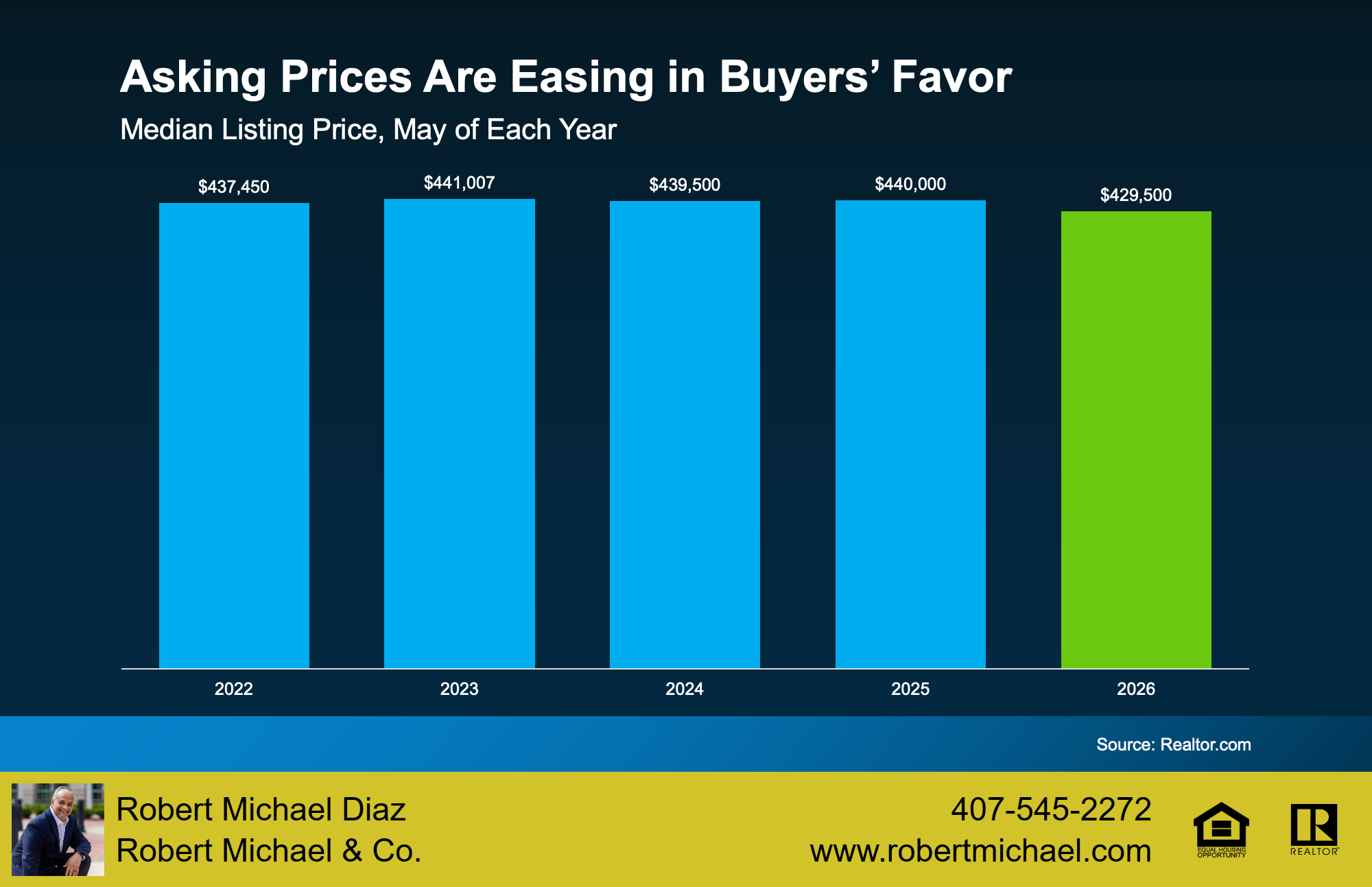
Take a look at the latest Realtor.com data. For the first time in several years, buyers are finally seeing some meaningful price relief in May.
From 2022 through 2025, home prices remained remarkably consistent each May, with little movement in either direction. This year, however, the trend has shifted. The data shows a more noticeable change, creating a better environment for buyers than we've seen in recent spring markets (see graph below).
With more homes available, buyers can carefully consider multiple options before making an offer. This additional inventory allows families to prioritize factors such as school districts, commute times, neighborhood amenities, and future resale potential. Rather than feeling pressured to act immediately, buyers can approach the process with greater confidence and a clearer understanding of their options.
The increased selection also encourages sellers to remain competitive, which can contribute to further price adjustments and improved opportunities for motivated buyers.
Orlando Neighborhoods Offering Strong Value
Several Orlando-area communities continue to attract homebuyers due to their combination of lifestyle benefits, accessibility, and long-term growth potential.
Lake Nona remains one of the region's most sought-after locations thanks to its expanding healthcare sector, innovative business environment, and modern residential developments. Buyers who prioritize convenience and access to employment centers often find Lake Nona particularly appealing.
Winter Garden continues to attract families seeking a blend of historic charm and suburban comfort. Its vibrant downtown area, community events, and highly regarded schools contribute to its enduring popularity.
Clermont has emerged as a favorite among buyers looking for newer homes, scenic surroundings, and relatively affordable housing options compared to some areas closer to Orlando's urban core. The city's rolling hills and growing infrastructure make it an attractive choice for many households.
Oviedo consistently appeals to families due to its reputation for strong schools, well-maintained parks, and family-oriented atmosphere. The community offers convenient access to major employers while maintaining a suburban feel.
Kissimmee continues to provide opportunities for both homeowners and investors, particularly those seeking affordability and proximity to major attractions, transportation routes, and employment centers.
Why Lower Asking Prices Benefit Today's Buyers

Lower listing prices can improve affordability in several ways. Even a modest reduction can decrease monthly mortgage payments and reduce the amount needed for a down payment. These savings can have a meaningful impact on a buyer's long-term financial situation.
In addition to direct cost savings, buyers may find themselves in a stronger negotiating position. During highly competitive periods, sellers often dictated terms and accepted only the most aggressive offers. Today's market conditions can provide buyers with greater leverage during negotiations.
Asking for assistance with closing costs, requesting repairs after inspections, or negotiating more favorable contract terms may now be more realistic in many situations. These advantages can translate into substantial savings beyond the purchase price itself.
Buyers also benefit from having more time to evaluate properties thoroughly. The ability to compare multiple homes and conduct comprehensive inspections helps reduce the likelihood of making rushed decisions that could lead to costly surprises later.
Looking Beyond the Listing Price
While lower asking prices are encouraging, buyers should consider the full financial picture before making a purchase. Mortgage rates continue to play a significant role in determining affordability, and even small rate changes can impact monthly payments.
Property condition is another important factor. In some cases, a lower asking price may reflect the need for repairs or updates. Conducting a professional home inspection remains essential for identifying potential issues and understanding future maintenance costs.
Long-term value should also be part of the decision-making process. Factors such as neighborhood development, school quality, infrastructure improvements, and local economic growth can influence a property's future appreciation potential. Buyers who focus solely on immediate savings may overlook opportunities that offer stronger long-term benefits.
What First-Time Buyers Should Know
For first-time homebuyers, today's market may present opportunities that were difficult to access during previous years. Reduced competition and increased inventory can make the buying process feel less overwhelming and more manageable.
However, preparation remains critical. Buyers who understand their budget, maintain strong credit profiles, and obtain mortgage pre-approval are often better positioned to act when the right property becomes available. Taking these steps early can help streamline the purchasing process and improve negotiating confidence.
Many first-time buyers are discovering that today's environment allows them to ask more questions, compare more properties, and make decisions with greater certainty than was possible during the peak of the seller's market.
Orlando's Long-Term Growth Continues to Support Housing Demand

Although asking prices have adjusted in some areas, Orlando's long-term outlook remains strong. The region continues to attract new residents due to its economic opportunities, quality of life, and year-round appeal.
Population growth remains a major driver of housing demand throughout Central Florida. New residents relocating from other states continue to contribute to market activity, supporting long-term stability across many communities.
Orlando's economy also benefits from a diverse range of industries, including healthcare, technology, aerospace, education, hospitality, and professional services. This economic diversity helps support job creation and contributes to ongoing housing demand.
Infrastructure investments and transportation improvements throughout the region continue to enhance accessibility and support future growth. These factors reinforce Orlando's position as one of Florida's most desirable housing markets.
Finding Opportunity in a Changing Market
The current Orlando housing market offers a unique combination of opportunities for buyers. Lower asking prices, increased inventory, and improved negotiating conditions are helping create a more balanced environment than many buyers have experienced in recent years.
Success in today's market still requires careful planning and informed decision-making. Buyers who research neighborhoods, understand financing options, and evaluate properties based on both current value and future potential are likely to be in the strongest position.
As Orlando continues to grow and evolve, those who take advantage of today's opportunities may find themselves securing a home that aligns with both their immediate needs and long-term financial goals.
Conclusion
Lower home asking prices are providing Orlando buyers with opportunities that were difficult to find during the highly competitive housing market of previous years. With more homes available, greater negotiating flexibility, and improved affordability, buyers have a chance to approach the home search process with renewed confidence.
While market conditions will continue to evolve, today's environment highlights the importance of preparation, patience, and strategic decision-making. For many Orlando homebuyers, lower asking prices may be the opening needed to achieve homeownership in one of Florida's most dynamic and desirable regions.