
The Orlando Housing Market Is Entering a New Phase
Discover how lower home asking prices are helping Orlando homebuyers gain negotiating power, improve affordability, and find better real estate opportunities in 2026. Learn what this market shift means for buyers and sellers in Central Florida.
As the Orlando real estate market continues to evolve in 2026, many buyers are noticing a trend that would have seemed unusual just a few years ago: more homes are experiencing price reductions before they sell. While some people immediately assume that lower asking prices signal trouble in the housing market, the reality is often much more positive for prospective homeowners.
After years of intense competition, rapid appreciation, and bidding wars, the market is moving toward a healthier balance between buyers and sellers. For those looking to purchase a home in Orlando and the surrounding Central Florida area, this shift is creating opportunities that have been difficult to find since the height of the pandemic housing boom.
Understanding why asking prices are adjusting and how buyers can benefit from these changes is essential for anyone considering purchasing a home in today's market.
A More Balanced Market Is Emerging

The housing market that existed in 2021 and 2022 was driven by extraordinary circumstances. Historically low mortgage rates fueled demand, while limited inventory gave sellers significant control over transactions. Homes frequently received multiple offers within days, and buyers often found themselves paying well above asking price just to compete.
Today's market tells a different story. Mortgage rates remain higher than the record lows buyers once enjoyed, which has caused many consumers to become more cautious about their monthly housing costs. At the same time, inventory levels have gradually increased across many Orlando communities, giving buyers more choices and reducing the urgency that once defined the homebuying process.
As a result, sellers are facing a more informed and selective buyer pool. Homes that are priced too aggressively often sit on the market longer than expected, encouraging sellers to make adjustments that better reflect current market conditions.
This is not a market collapse. Instead, it represents a return to a more traditional real estate environment where pricing accuracy matters and negotiations play a larger role in the transaction.
Why Lower Asking Prices Can Benefit Buyers
For many buyers, a lower asking price translates into immediate financial advantages. A reduction in a home's list price can decrease the amount that needs to be financed, which can lower monthly mortgage payments and improve overall affordability.
In a market where buyers remain sensitive to monthly housing costs, even a modest reduction can make a meaningful difference. Lower asking prices can also improve a buyer's purchasing power, allowing them to consider neighborhoods or home features that may have previously been outside their budget.
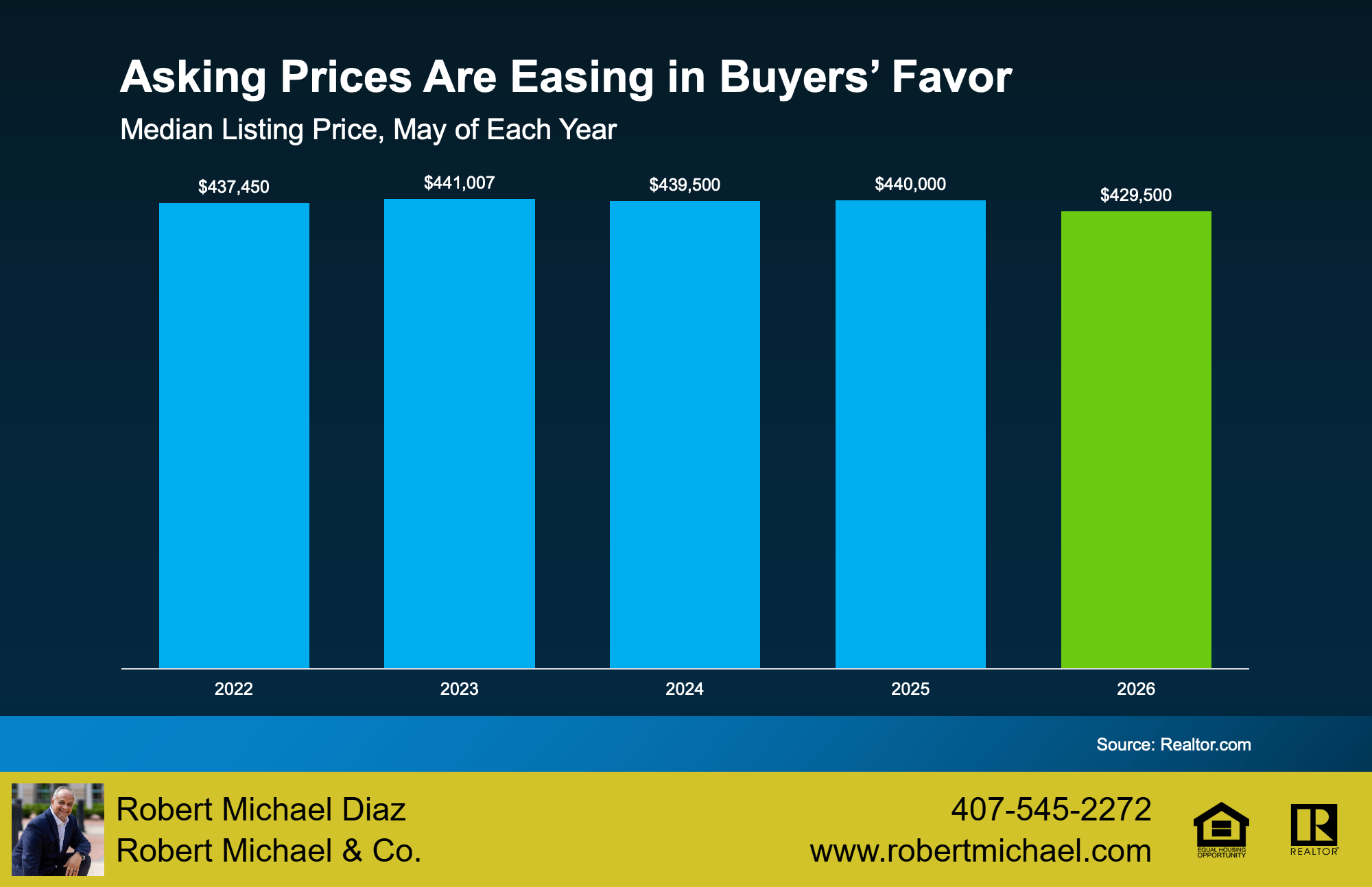
According to Realtor.com data, this marks the first May in several years where buyers have seen meaningful relief on pricing.
From 2022 through 2025, home prices remained remarkably consistent each May, with little movement in either direction. This year, however, the trend has started to shift. The latest data shows a more noticeable change that favors buyers, signaling a market that's becoming a bit more balanced (see graph below).
Beyond affordability, price reductions often indicate that sellers are becoming more flexible. A seller who has already adjusted their asking price may also be more willing to negotiate on other aspects of the transaction. This can create opportunities for buyers to secure closing cost assistance, repair credits, or favorable contract terms that may not have been available during a highly competitive seller's market.
Perhaps most importantly, buyers now have more time to make thoughtful decisions. Instead of feeling pressured to submit an offer within hours of a listing hitting the market, many buyers can take the time to compare properties, evaluate financing options, and conduct thorough inspections before moving forward.

Orlando's Unique Market Conditions
Orlando remains one of Florida's most desirable metropolitan areas. The region continues to attract new residents due to its strong job market, growing technology sector, world-renowned attractions, and relatively affordable cost of living compared to other major Florida cities.
Communities such as Lake Nona, Winter Garden, Winter Park, Clermont, and Oviedo continue to experience strong demand from families, professionals, and retirees alike. However, increased inventory across parts of Central Florida has created more opportunities for buyers than were available in recent years.
In many Orlando neighborhoods, buyers are discovering that they have greater flexibility during negotiations. Properties are often spending more time on the market than they did during the peak years of the housing boom, giving prospective homeowners the ability to evaluate multiple options before making a commitment.
This expanded inventory is helping create a healthier marketplace where buyers can focus on finding the right home rather than simply finding any available home.
More Choices Lead to Better Decisions
One of the most overlooked benefits of a market with lower asking prices is the increased selection available to buyers.
When inventory is limited, buyers frequently feel forced to compromise on features, location, or condition. In today's environment, many Orlando homebuyers are finding a wider variety of properties that meet their needs and preferences.
This means buyers can spend more time evaluating floor plans, school districts, commute times, community amenities, and long-term investment potential. Having more options often leads to better purchasing decisions and greater satisfaction after closing.
Rather than rushing into a transaction because of fear of missing out, buyers can approach the process with confidence and clarity.
Why Some Sellers Are Adjusting Expectations
Many homeowners still remember the extraordinary market conditions that allowed properties to sell quickly and often above asking price. Some sellers continue to enter the market with pricing expectations based on those earlier years.
However, today's buyers have access to extensive market data and comparable sales information. They can quickly identify when a property appears overpriced relative to similar homes in the same neighborhood.
When buyers perceive that a listing is priced too high, they often choose to wait rather than submit an offer. This lack of activity can lead sellers to reduce their asking price in order to attract renewed interest.
In many cases, these price reductions are not a sign that the home has lost value. Instead, they reflect a correction from an overly ambitious initial listing price to a figure that better aligns with current market realities.
Timing the Market Isn't the Goal

Whenever buyers hear about lower asking prices, some wonder whether they should continue waiting for even greater discounts. While that approach may seem logical, attempting to perfectly time the housing market is extremely difficult.
Real estate markets are influenced by numerous factors, including mortgage rates, inventory levels, local economic conditions, population growth, and consumer confidence. Predicting exactly when prices will reach their lowest point is nearly impossible.
For Orlando buyers, the more important question is whether purchasing a home aligns with their personal financial goals and lifestyle needs.
A buyer who is financially prepared, has stable income, and finds the right property may benefit more from acting when an opportunity arises rather than waiting indefinitely for further market changes.
What Orlando Buyers Should Focus On Today

The most successful buyers in today's market are those who approach the process strategically. Preparation remains essential, regardless of market conditions.
Understanding financing options, obtaining mortgage pre-approval, researching neighborhoods, and working with knowledgeable local professionals can all help buyers take advantage of current opportunities.
It is also important to look beyond the asking price alone. Factors such as property condition, insurance costs, homeowners association fees, school quality, and future resale potential can significantly impact the long-term value of a home purchase.
A lower asking price may create an attractive opportunity, but the best decisions are made when buyers evaluate the complete picture.
Looking Ahead for Orlando Real Estate

As 2026 continues, many market observers expect Orlando's housing market to remain relatively balanced compared to the extreme conditions experienced earlier in the decade. Inventory levels, buyer demand, and mortgage rates will continue influencing local trends, but the current environment is providing buyers with more leverage than they have enjoyed in years.
For many prospective homeowners, this balance creates an ideal opportunity to enter the market. Lower asking prices, increased inventory, and improved negotiating conditions are helping buyers regain confidence and explore options that may have previously felt out of reach.
While every real estate market experiences cycles, today's Orlando buyers are benefiting from a landscape that rewards preparation, patience, and informed decision-making.
Conclusion
Lower home asking prices should not be viewed as a negative development for Orlando homebuyers. Instead, they represent a market adjustment that is creating meaningful opportunities throughout Central Florida.
As sellers adapt to changing conditions and buyers gain more options, the homebuying process is becoming less stressful and more strategic. Improved affordability, increased negotiating power, and greater inventory selection are helping buyers make decisions based on long-term goals rather than short-term pressure.
For those considering purchasing a home in Orlando, the current market may offer some of the best opportunities seen in recent years. Buyers who are prepared and informed can take advantage of these conditions to secure a home that fits both their lifestyle and financial objectives.