How Buying or Selling a Home Strengthens Your Community
Buying or selling a home can feel like a deeply personal decision. Maybe you're looking for more space, relocating for work, downsizing, moving closer to family, or simply ready for something new.
But a real estate transaction rarely affects only the buyer and seller.
Behind every set of keys handed over and every "Sold" sign is a network of professionals, businesses, public services, and neighbors that can benefit from housing activity. From real estate agents and home inspectors to contractors, furniture stores, landscapers, restaurants, schools, and local governments, the impact of buying or selling a home reaches farther than many people realize.
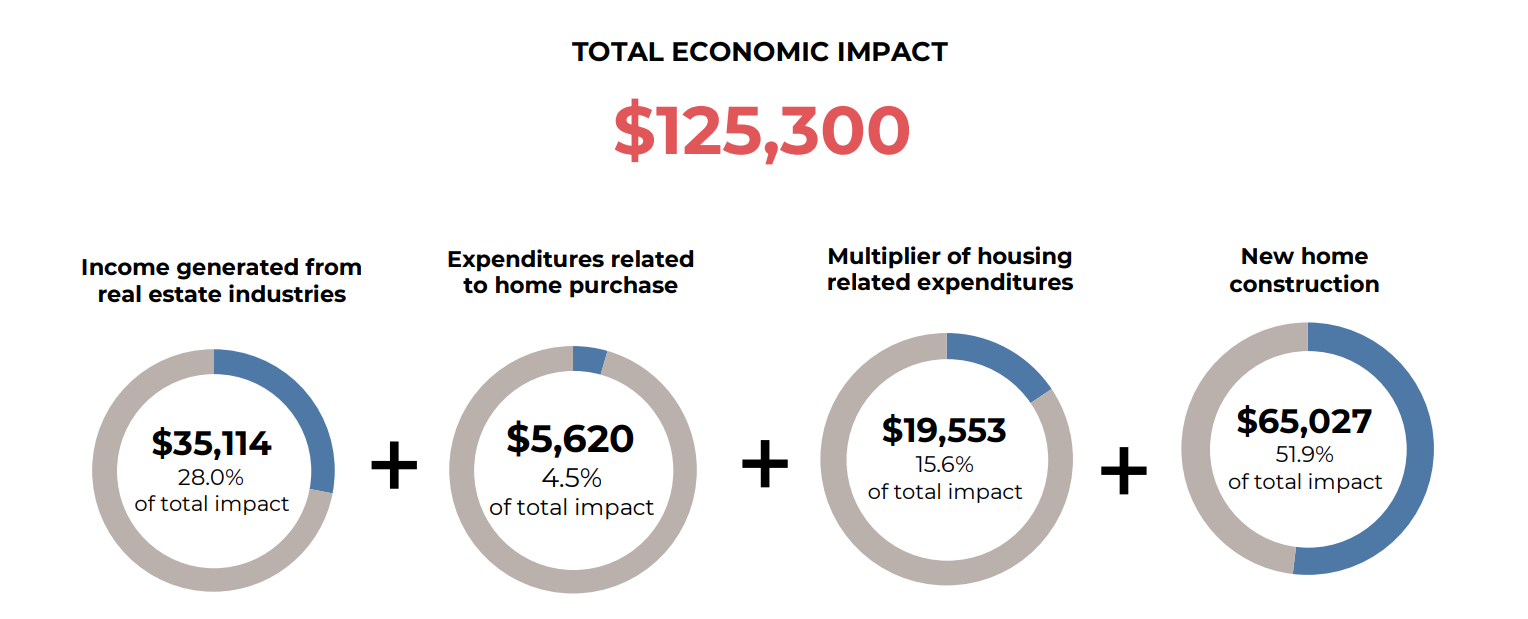
In fact, the National Association of REALTORS® estimated that a typical U.S. home sale generated approximately $125,300 in total economic impact based on its 2025 national analysis. That estimate incorporates activity connected to real estate industries, spending related to a home purchase, the circulation of housing-related income, and new-home construction stimulated by existing-home sales.
So while moving may begin with your own housing goals, it can also contribute to the economic health and vitality of the place you call home.
A Home Sale Creates a Chain of Local Economic Activity
Think about everything that happens between deciding to move and finally settling into a home.
A seller may hire a real estate professional, photographer, cleaner, painter, landscaper, handyman, roofer, or contractor to prepare the property for market.
A buyer may work with a real estate agent, lender, appraiser, home inspector, title professional, attorney, insurance provider, moving company, and other specialists before receiving the keys.
And the spending often continues after closing.
New homeowners commonly purchase furniture, appliances, window treatments, paint, tools, landscaping supplies, security equipment, and other household items. They may renovate a kitchen, replace flooring, install a fence, update a bathroom, or hire local tradespeople.
Research from the National Association of Home Builders has found that buying a home tends to generate additional spending on appliances, furnishings, repairs, and property alterations. Its analysis found that buyers of existing single-family homes historically spent thousands of dollars more than comparable homeowners who had not recently moved.
That creates a ripple effect.
The money associated with one transaction may become revenue for a local contractor. That contractor pays employees and buys supplies. Employees spend part of their earnings at nearby restaurants, stores, gas stations, and service businesses.
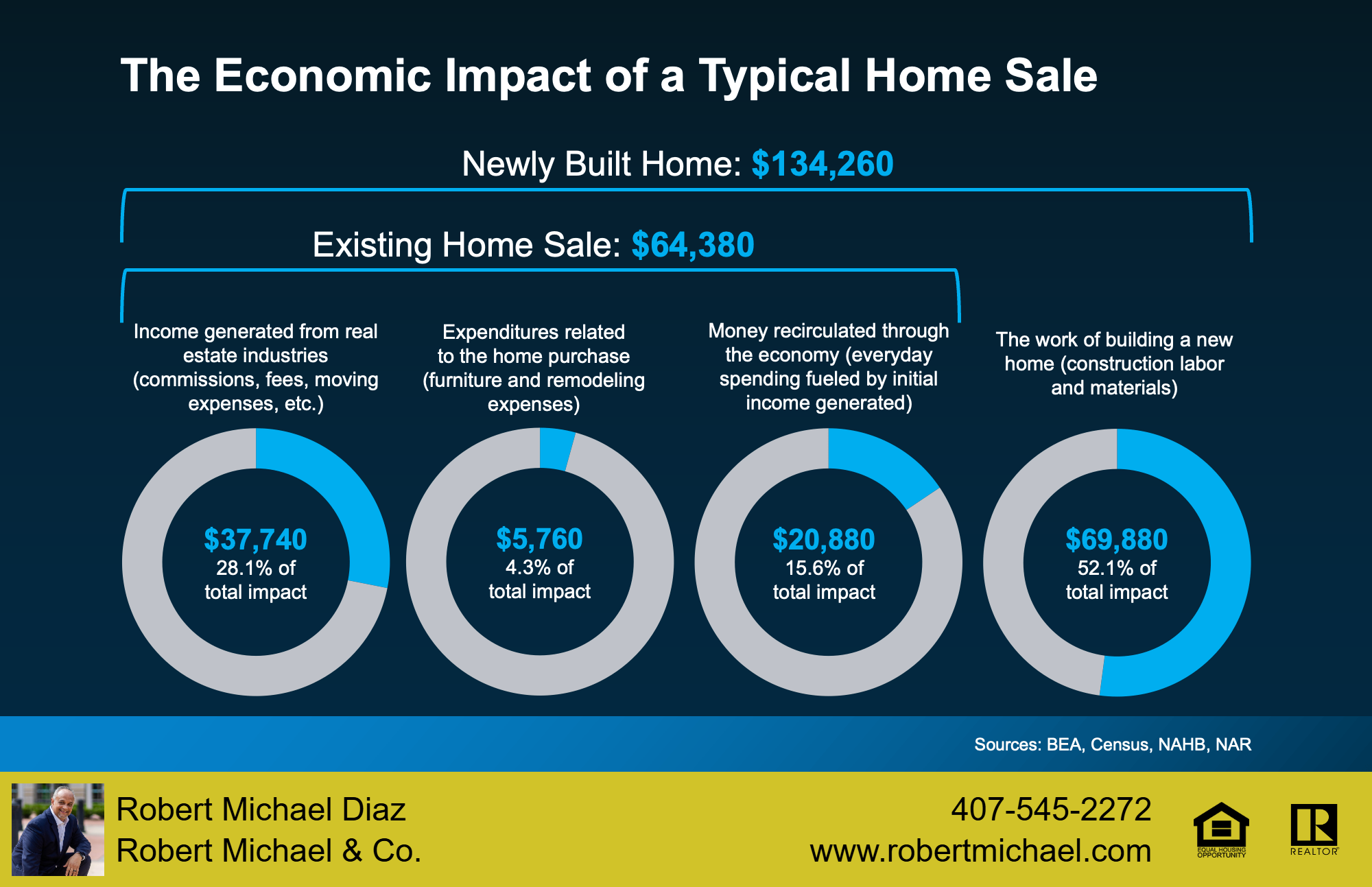
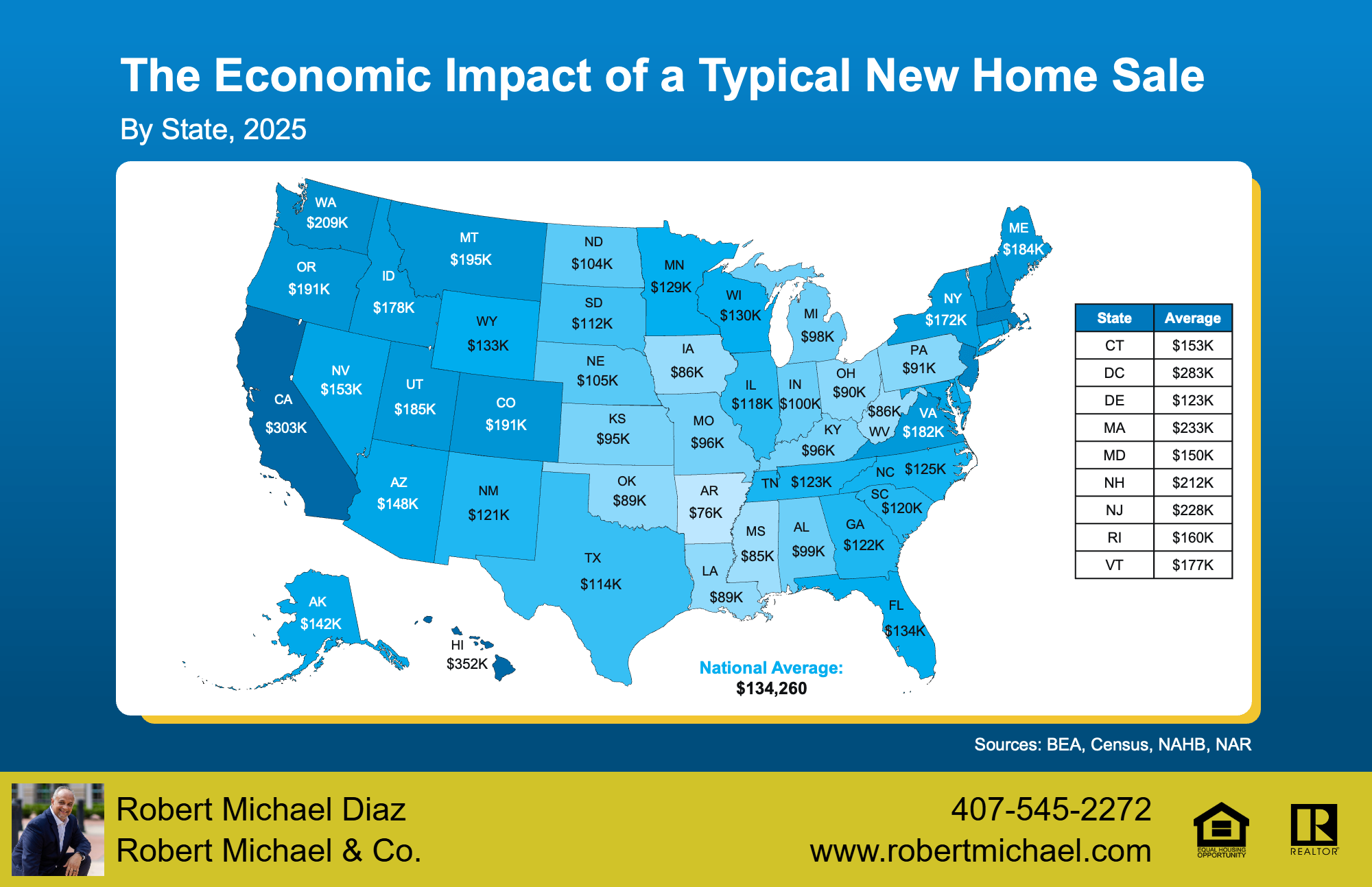
Every home purchase creates a ripple effect that benefits the surrounding community. When someone buys an existing home, the transaction generates an estimated $64,000 in local economic activity, according to the National Association of Realtors (NAR). The impact is even greater with newly constructed homes, which contribute more than $134,000 to the local economy through spending on construction, services, furnishings, and related industries (see graph below).
One housing decision can therefore become part of a much larger cycle of economic activity.
Real Estate Transactions Support Local Jobs
A successful home sale usually requires more people than the buyer, seller, and real estate agent.
Depending on the property and location, a transaction can involve professionals such as:
Real estate agents and brokers
Mortgage lenders and loan officers
Home inspectors
Appraisers
Title and escrow professionals
Real estate attorneys
Insurance agents
Photographers and videographers
Home stagers
Movers
Contractors and remodelers
Electricians and plumbers
HVAC technicians
Painters
Landscapers
Cleaners and organizers
Many of these professionals either own small businesses themselves or work for companies that employ people in the surrounding area.
This is one reason housing has such a significant relationship with the broader economy. NAHB estimates that housing's combined contribution generally represents about 15% to 18% of U.S. gross domestic product, including residential investment and housing-related services.
Of course, a single home sale doesn't transform an economy by itself. But multiply that activity across hundreds or thousands of transactions within a metro area, and the connection between a healthy housing market and local employment becomes much easier to see.
Moving Often Means Spending Money Close to Home
The economic influence of a home purchase doesn't end when the closing documents are signed.
Consider the first few weeks after moving.
A homeowner might visit the neighborhood hardware store for paint. Then they hire a plumber to replace a fixture. They order lunch from a nearby restaurant while unpacking. The following weekend, they visit a garden center, buy furniture, and schedule a local company to service the HVAC system.
A family that is new to the area may also begin developing long-term relationships with nearby:
Grocery stores
Restaurants and coffee shops
Gyms
Doctors and dentists
Childcare providers
Veterinarians
Mechanics
Salons
Home-service companies
Entertainment venues
These purchases may seem small individually, but together they help sustain the commercial ecosystem surrounding a residential neighborhood.
Housing Activity Can Benefit Small Businesses
Small businesses thrive when communities have residents who are engaged, invested, and spending locally.
Real estate activity can bring new customers into an area while encouraging existing homeowners to invest in their properties.
A homeowner renovating before selling might hire a neighborhood painting company. A buyer could choose a local furniture store instead of a national retailer. Someone relocating into the community may discover an independent coffee shop, family-owned restaurant, local daycare, or neighborhood fitness studio.
The connection becomes even more visible when remodeling is involved.
NAHB estimated that U.S. homeowners spent roughly $670 billion on remodeling projects in 2024, with about 20 million households undertaking improvements ranging from renovations to smaller property upgrades.
That activity creates opportunities throughout industries tied to construction, materials, design, maintenance, and professional services.
For homeowners, the goal may simply be improving a property. For a community, that improvement can mean another local project, another paying customer, and additional economic activity.
Property Ownership Helps Support Community Services
The relationship between homes and communities isn't limited to private businesses.
Property taxes are an important source of revenue for many local governments and school systems. The exact way funds are collected and allocated varies considerably by state and municipality, but property-related revenue can help support services and infrastructure residents use every day.
The economic impact of a home purchase isn't the same everywhere. Factors such as local housing markets, labor costs, and regional spending patterns all influence how much a home sale contributes to the surrounding economy.
To illustrate these differences, the map below highlights the estimated economic impact of a typical newly constructed home sale in each state. While the nationwide average is roughly $134,000, several states generate significantly higher levels of local economic activity from every new home sold (see map below).
That may include schools, roads, emergency services, libraries, parks, sanitation, and other local programs
.
The U.S. Census Bureau reported that local sources supplied 43.2% of public elementary and secondary school funding in fiscal year 2024, and property taxes represented a substantial portion of revenue coming from local sources.
This does not mean every dollar in property taxes goes directly to a neighborhood school or that moving automatically increases public funding. Local tax systems are much more complex than that.
It does demonstrate, however, that residential property is closely connected with the financial foundation of many communities.
Homeowners Often Become Invested in the Neighborhood Around Them
The benefits of a healthy housing market aren't purely financial.
Buying a home frequently represents a long-term commitment to a place.
Once homeowners settle in, many begin building relationships with neighbors and participating in the community in ways that aren't easily measured in dollars.
They might volunteer at a school, attend neighborhood meetings, participate in community cleanups, support local events, join recreational organizations, shop at nearby businesses, or simply help a neighbor when needed.
The house becomes more than an asset. It becomes a base for participating in community life.
That sense of connection can contribute to neighborhoods where residents care about maintaining shared spaces, supporting local organizations, and improving the quality of life around them.
Sellers Play an Important Role, Too
It is easy to focus primarily on buyers when discussing the community impact of real estate, but sellers are an equally important part of the process.
When someone lists a home, they add housing inventory to the local real estate market.
That property could become a first home for a young professional, additional space for a growing family, a more manageable home for someone downsizing, or an opportunity for a person relocating into the community.
Without homeowners willing or able to sell, available inventory can become more limited.
Every listing therefore becomes another potential opportunity for someone whose current housing no longer fits their needs.
Sellers also commonly invest money into preparing homes for the market. Repairs, painting, landscaping, cleaning, staging, inspections, photography, and maintenance can all create additional work for local professionals before a transaction even occurs.
Healthy Housing Markets Help Communities Adapt
Communities are constantly changing.
Families grow. Children leave home. People retire. Businesses hire new employees. Workers relocate. Couples combine households. Others move to be closer to relatives.
A functioning housing market helps people adjust to these changes.
When enough housing options are available at different price points and property types, residents have a better chance of finding a home appropriate for their current stage of life.
A home sale creates opportunities for far more people than just the buyer and seller. Every transaction fuels work for professionals across the community, including real estate agents, mortgage lenders, home inspectors, contractors, movers, and countless local businesses that support the moving process.
As Lawrence Yun, Chief Economist at the National Association of Realtors (NAR), explains:
"Increased home sales mean more economic activity — lawn care, furniture purchases, moving services, mortgage originations and other related business activities all get a boost."
The economic benefits extend well beyond the closing table. Your decision to buy or sell helps sustain local jobs, supports small businesses, and keeps money circulating within the community. In many cases, one home sale can help families earn a living and businesses continue to grow, making every transaction meaningful for the local economy.
That makes housing supply, attainable pricing, and access to homeownership especially important topics for communities.
A strong housing market shouldn't simply mean increasing prices. A truly healthy market gives people choices and allows a community to welcome new residents while helping existing residents remain connected to the area as their housing needs change.
Your Real Estate Decision Is Part of a Bigger Story
When you're in the middle of buying or selling a house, it's understandable to focus on the immediate details.
What's the right asking price?
How much can you afford?
What repairs should be completed?
Which neighborhood makes sense?
How quickly can you move?
Those questions matter.
But there's another perspective worth remembering: a real estate transaction is connected to an entire community.
The home inspector who evaluates the property has a business to run. The local contractor completing repairs employs a crew. The moving company schedules another job. A neighborhood restaurant gains new customers. A homeowner begins paying property taxes and participating in community life. A seller makes a property available to someone whose family needs it.
A home purchase or sale may be one of the biggest financial decisions you make, but its effects don't necessarily stop at your front door.
The Bottom Line
Buying or selling a home can contribute to your community in ways that aren't immediately visible. Housing transactions help generate demand for professional services, create work for local businesses, encourage spending on renovations and household goods, contribute to property-tax systems, and help residents move into homes that better suit their lives.
That doesn't mean you should buy or sell simply to stimulate the economy. Your decision should always be based on your finances, personal goals, housing needs, and current market conditions.
But if the time is right for you to make a move, it's worth recognizing the larger impact.
You aren't simply changing your address.
You're participating in a network of economic and community activity that helps keep neighborhoods moving forward.
Thinking about buying or selling a home? Connect with a trusted local real estate professional who can help you understand current market conditions, evaluate your options, and determine whether making a move supports your goals.