Can You Buy a Home with Student Loans in Central Florida?

Buying a home with student loans in Central Florida
Learn how student loans affect mortgage approval and explore down payment assistance for first-time homebuyers in Orlando and Central Florida.
For many Central Florida renters, student loan debt feels like a locked gate between them and homeownership. The balance may be substantial, repayment rules may be changing, and online advice can make the mortgage process sound more restrictive than it really is.
However, having student loans does not automatically prevent you from qualifying for a mortgage.
The more useful question is not, “Do I have student loans?” It is, “How will a mortgage lender calculate my student loan payment, income, credit history, savings, other debts and expected housing expenses?”
That distinction is important. A borrower with a high student loan balance and a manageable documented payment may be in a stronger financial position than someone with a smaller balance, high credit-card payments, limited savings or recent late payments.
Student Loan Rules Are Changing Again
Federal student loan borrowers should confirm their current repayment plan before beginning a mortgage application.
Effective July 1, 2026, Federal Student Aid introduced major repayment changes, including the new Repayment Assistance Plan and Tiered Standard Plan. Borrowers can review these changes on the official Federal Student Aid program updates page.
A court order also ended the Saving on a Valuable Education, or SAVE, Plan in March 2026. Borrowers who were enrolled in SAVE may need to select another repayment option after receiving instructions from their loan servicer. Additional information is available through the MOHELA Federal Student Aid repayment-plan page.
These developments matter to prospective homebuyers because an old payment amount may no longer match the amount a mortgage lender needs to document. Before applying for financing, download a recent student loan statement showing your current balance, repayment plan, required payment and account status.
How Student Loans Affect Mortgage Approval

Mortgage lenders generally evaluate recurring monthly obligations through a calculation known as the debt-to-income ratio, or DTI.
Your DTI compares your qualifying gross monthly income with monthly financial obligations such as:
The proposed mortgage payment
Property taxes and insurance
Automobile loans
Credit-card minimum payments
Personal loans
Student loan payments
Other recurring financial obligations
For example, imagine a Central Florida buyer who earns $6,500 in gross monthly income and has the following estimated obligations:
| Monthly obligation | Amount |
|---|---|
| Proposed housing payment | $2,200 |
| Automobile payment | $450 |
| Credit-card minimums | $150 |
| Student loan payment | $300 |
| Total monthly obligations | $3,100 |
Dividing $3,100 by $6,500 produces an illustrative DTI of approximately 47.7%.
That percentage does not guarantee an approval or denial. The final decision may depend on the mortgage program, credit profile, available cash reserves, down payment, automated underwriting results and the lender’s individual requirements.
The example demonstrates why the monthly payment used for a student loan can be more important to immediate mortgage qualification than the total student loan balance.
Different Mortgage Programs May Calculate Student Loans Differently

One of the most important things Central Florida buyers should understand is that mortgage programs do not always treat student loan debt the same way.
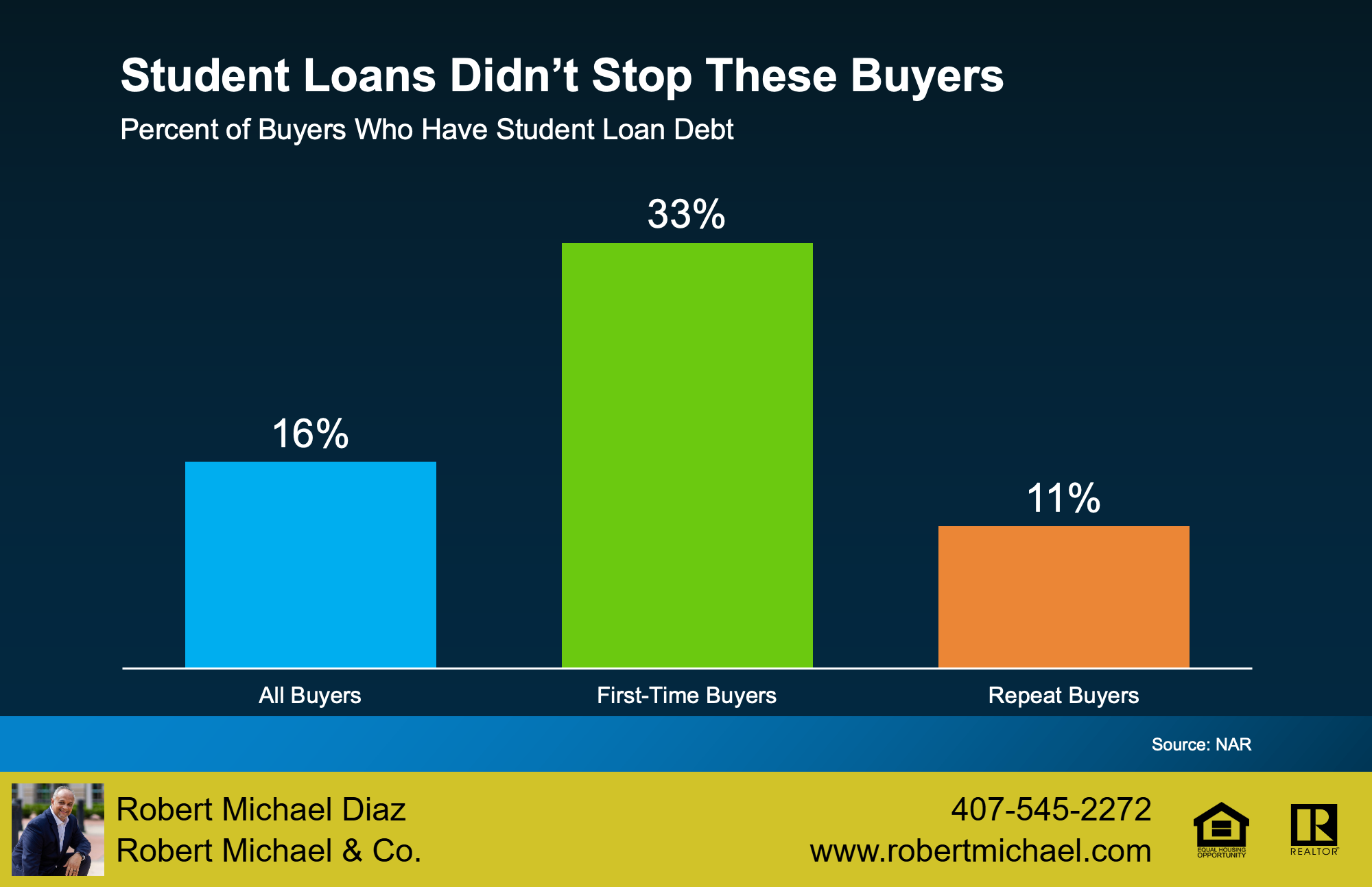
If you're worried that student loan debt automatically disqualifies you from buying a home, the data tells a different story. According to research from the National Association of Realtors (NAR), 33% of first-time homebuyers carried student loan debt when they purchased their homes. In other words, having student loans doesn't necessarily prevent you from becoming a homeowner—it simply means your financial situation needs to be evaluated as a whole.
Conventional Loans Following Fannie Mae Guidelines
Under current Fannie Mae student loan guidelines, a lender may generally use the student loan payment shown on the borrower’s credit report or a more accurate payment documented by the loan servicer.
When a borrower is enrolled in an income-driven repayment plan and documentation verifies that the actual required payment is $0, Fannie Mae permits the lender to use a $0 payment for qualification.
For a deferred loan or a loan in forbearance, Fannie Mae permits the lender to calculate either:
A payment equal to 1% of the outstanding student loan balance, or
A fully amortizing payment based on documented repayment terms
This means that obtaining an updated servicer statement can make a significant difference when the payment appearing on your credit report is outdated or inaccurate.
FHA Loans
FHA financing handles $0 student loan payments differently.
According to HUD Mortgagee Letter 2021-13, an FHA lender generally uses the amount reported on the credit report or the actual documented payment when that payment is greater than zero. When the reported monthly payment is zero, the lender generally calculates a payment equal to 0.5% of the outstanding student loan balance.
For example, 0.5% of a $60,000 student loan balance would equal a $300 monthly qualifying payment.
A conventional lender evaluating the same borrower may be able to use a lower documented income-driven payment. However, this does not mean conventional financing will always be the better choice.
FHA and conventional mortgages differ in their down payment requirements, credit standards, mortgage insurance, property requirements and long-term costs. A lender should compare the complete scenarios rather than recommending a program based solely on the student loan calculation.
What Central Florida Homebuyers Should Know About the Local Market
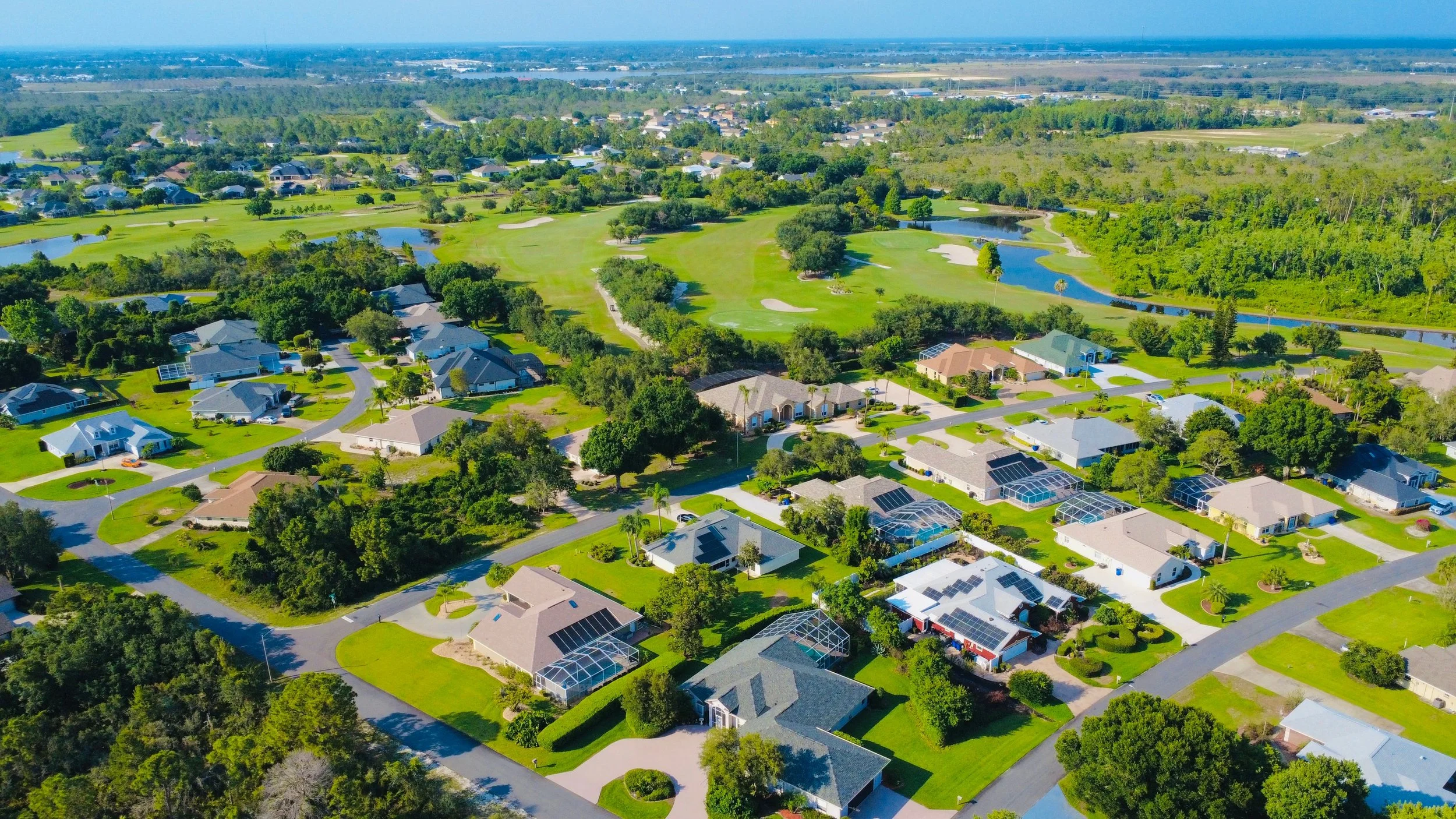
The mortgage amount you can qualify for must be considered alongside actual Central Florida home prices and ownership expenses.
According to the Orlando Regional REALTOR® Association’s market reports, the Orlando-area market recorded 2,708 sales in May 2026, an overall median price of approximately $407,002, inventory of 11,531 properties and an average of 66 days on the market.
Those regional numbers do not mean every Central Florida community has the same housing conditions. Prices and available inventory can vary considerably between areas such as:
Orlando
Kissimmee and St. Cloud
Sanford and Lake Mary
Clermont and Minneola
Winter Garden and Ocoee
Altamonte Springs and Casselberry
Apopka
Oviedo
Davenport
A longer average marketing period and additional inventory may give prepared buyers more time to evaluate properties, request inspections and negotiate certain contract terms. Buyers should still be ready to act when a well-priced property meets their needs.
Calculate the Complete Central Florida Housing Payment
The advertised purchase price is only one part of the cost of owning a home.
A realistic Central Florida homeownership budget may include:
Mortgage principal and interest
Property taxes
Homeowners insurance
Flood insurance when applicable
Mortgage insurance
Homeowners association dues
Condominium fees
Special assessments
Utilities
Routine maintenance
Pest control and landscaping
Transportation and commuting costs
Insurance deserves particular attention in Florida. Two homes with similar prices may carry significantly different insurance expenses because of their age, roof condition, construction type, location, claims history or flood-risk designation.
Buyers considering condominiums should also review association budgets, reserves, structural inspection information, pending assessments and current insurance coverage.
A mortgage preapproval establishes an underwriting limit. It does not require you to spend the maximum amount for which you qualify.

Central Florida Down Payment Assistance Options
Student loan borrowers frequently assume they must eliminate their education debt and save a 20% down payment before buying a house. Neither assumption is universally correct.
For example, qualified FHA borrowers may be able to purchase a home with a down payment as low as 3.5%. The official HUD FHA home loan overview explains the program’s basic down payment and eligibility features.
Qualified Central Florida buyers may also be able to use local or statewide down payment and closing-cost assistance.
Orange County Down Payment Assistance
The current Orange County Homebuyer Down Payment Assistance Program lists assistance based on household income and size.
Published 2026 assistance amounts include:
Up to $70,000 for eligible very-low-income households
Up to $40,000 for eligible low-income households
Up to $10,000 for eligible moderate-income households
Applicants must meet program requirements, complete an approved homebuyer education program and obtain an eligible first mortgage. Income limits, property requirements, residency rules and available funding should be confirmed before making an offer.
Orange County Housing Finance Authority
The Orange County Housing Finance Authority homebuyer program serves eligible buyers purchasing in Orange, Lake, Osceola and Seminole counties.
The program advertises up to $10,000 toward eligible down payment or closing costs, depending on the mortgage product. Assistance may be structured as a 0% deferred loan that becomes repayable after 30 years or earlier if the property is sold, refinanced, transferred or no longer occupied as the borrower’s principal residence.
Because available products and assistance levels can change, buyers should verify the current amount with an approved participating lender.
Florida Housing Programs
The Florida Housing Finance Corporation homebuyer program offers 30-year first mortgages and several potential second-mortgage assistance options for qualified buyers.
Florida Housing currently lists options such as Florida Assist, the Florida Homeownership Loan Program and certain forgivable second mortgages. Its real estate professional program page provides an overview of the assistance amounts associated with these products.
Florida Housing also administers the Hometown Heroes Program, which can provide qualified first-time buyers in eligible workforce occupations with assistance equal to as much as 5% of the first mortgage, subject to published minimums, maximums and funding availability.
However, Florida Housing reported that all funding for the program’s 2025–2026 cycle had been committed. Buyers should therefore check the official program page for new funding announcements rather than assuming assistance is currently available.
City of Orlando Programs
The City of Orlando currently states that it is not accepting new applications for its standard down payment assistance program and directs potential applicants to investigate Orange County assistance, depending on funding availability. Buyers can monitor the official City of Orlando down payment assistance page for changes.
A separate, more narrowly targeted option may be available through the Orlando Unlocked: Open Door Program. That program provides assistance for eligible buyers purchasing qualifying homes constructed on previously vacant lots within the Downtown Community Redevelopment Area. Property, income and construction requirements apply.
A Six-Step Homebuying Plan for Student Loan Borrowers

1. Verify Every Student Loan
Log in to your Federal Student Aid account and each private student loan servicer’s website.
Confirm your current balance, repayment plan, required payment, account status and next due date. Save recent statements as PDFs so you can provide them to a lender if the credit report contains outdated information.
2. Protect Your Credit History
Pay student loans, credit cards, auto loans and other accounts on time.
Avoid opening new credit accounts or financing large purchases while preparing to apply for a mortgage. A new automobile loan or furniture account can increase your monthly obligations and reduce your potential purchasing power.
3. Request More Than One Mortgage Scenario
Ask a qualified lender to compare appropriate conventional and FHA options.
The comparison should show:
The student loan payment used for qualification
Estimated interest rate
Mortgage insurance
Cash required at closing
Complete monthly housing payment
Available assistance
Repayment terms attached to assistance
4. Build a Homeownership Emergency Fund
Do not automatically send every available dollar to your student loan servicer.
Paying down debt may improve your DTI, but emptying your savings could leave you without funds for inspections, closing expenses, repairs or emergencies. Ask the lender to calculate which debt reduction would produce the greatest improvement before making a large payment.
5. Complete Homebuyer Education Early
Many Central Florida assistance programs require an approved homebuyer education course.
Completing the course before finding a home can prevent avoidable delays and help you understand mortgage documents, insurance, inspections, budgeting and closing costs.
6. Shop by Monthly Payment, Not Just Purchase Price
Two similarly priced homes can produce very different monthly expenses.
Before making an offer, request a property-specific estimate that includes taxes, insurance, association dues, mortgage insurance and available interest-rate options.
Common Mistakes That Can Delay Approval
Changing your student loan repayment plan during mortgage underwriting can cause documentation problems when the new payment has not yet appeared on your credit report or servicer statement.
Paying off the wrong debt can also waste valuable savings. Eliminating a small account with a low monthly payment may have less effect than reducing a revolving balance with a high required minimum payment.
You should also avoid:
Financing a vehicle before closing
Opening a furniture or appliance account
Co-signing another person’s loan
Moving large amounts of money without documentation
Changing jobs without discussing it with the lender
Missing payments while concentrating on the home purchase
Fannie Mae requires lenders to consider debts disclosed or discovered during the mortgage process, including obligations that may not have appeared on the original application. More information is available in the Fannie Mae Selling Guide.
Frequently Asked Questions
Do student loans prevent you from getting a mortgage?
No. Student loans are considered as part of your complete financial profile, but having student loan debt does not automatically disqualify you from obtaining a mortgage.
Does a $0 student loan payment count as zero?
It depends on the mortgage program. Fannie Mae may allow a documented $0 income-driven payment to be used as zero. FHA generally requires the lender to calculate a payment equal to 0.5% of the outstanding balance when the reported payment is zero.
Should I pay off my student loans before purchasing a home?
Not necessarily. Paying down student loans may improve mortgage qualification in some situations, but maintaining enough savings for closing costs, repairs and emergencies may be equally important. Ask a lender to compare different payoff options before using a large portion of your savings.
Can I receive down payment assistance while carrying student loan debt?
Student loan debt alone does not prevent you from applying for down payment assistance. You must still meet the program’s income, credit, property, occupancy, education and financing requirements.
Is down payment assistance free money?
Not always. Some programs provide grants or forgivable assistance, while others use deferred second mortgages that may need to be repaid when you sell, refinance, transfer the property or stop using it as your primary residence.
Replace Uncertainty with Real Numbers
Student loan debt may influence how much home you can comfortably afford, but it should not be treated as an automatic verdict against homeownership.
The best first step is to document your current student loan payment, review your credit, calculate a realistic housing budget and compare mortgage programs. Central Florida buyers should also investigate Orange County, OCHFA, Florida Housing and other local assistance before touring properties.
A professional review may show that you are ready to purchase now. It may instead reveal that several months of focused preparation would improve your available options.
Either result is valuable because it replaces uncertainty with a practical plan.
Speak with a qualified mortgage professional and a Central Florida real estate advisor who understand student loan underwriting and local homebuyer programs. Build your purchasing strategy around a monthly payment you can comfortably maintain—not simply the highest mortgage amount for which you might qualify.