Orlando’s Housing Market Is Moving—Just More Selectively
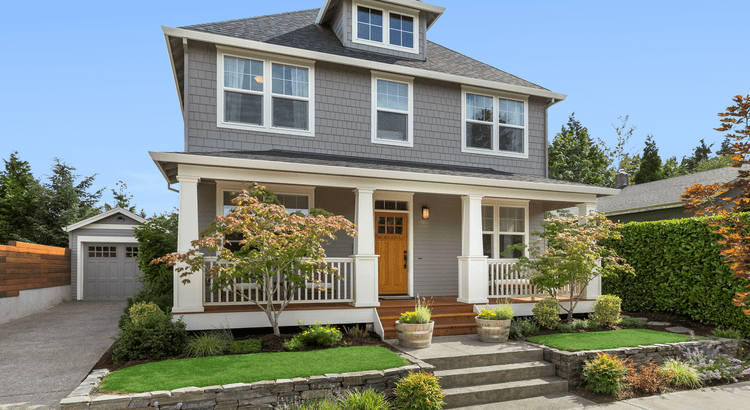
Orlando Housing Market 2026: Buyers Are Still Buying
Orlando homes are still selling in 2026. See what local sales, inventory, mortgage rates, and negotiation trends mean for Orlando buyers and sellers.
Turn on the news, scroll through social media, or talk with friends about real estate and you may hear the same message: buyers have disappeared.
That isn’t what the numbers show in Orlando.
The Orlando housing market in 2026 is certainly different from the frantic market buyers and sellers experienced several years ago. Mortgage rates remain higher than many homeowners became accustomed to, buyers are paying closer attention to monthly payments, and properties generally have more competition from other listings.
But a slower, more selective housing market is not the same thing as a frozen one.
Thousands of homes are still changing hands throughout Central Florida. Buyers are making offers, sellers are negotiating, and families are continuing to move because life does not wait for the perfect mortgage rate.
The more useful question isn't, “Are people still buying homes?”
They clearly are.
The better question is: What does today’s Orlando real estate market mean for someone thinking about buying or selling?

Thousands of Orlando-Area Homes Are Still Selling
Start with the actual sales numbers.
According to the Orlando Regional REALTOR® Association (ORRA), the Orlando-area market recorded 2,720 closed sales in July 2026. That included approximately 2,140 single-family home sales and 580 condo or townhouse sales. The overall median sale price for the area was $410,494. Orlando Regional REALTOR® Association July 2026 Housing Market Narrative
Those numbers matter because they put the headlines into perspective.
Yes, overall sales declined 7.4% from June to July. But June is traditionally one of the strongest seasonal months for real estate, and thousands of buyers still completed purchases the following month.
In fact, June had been especially active. ORRA reported that sales increased for five consecutive months leading into June, with nearly 2,930 transactions during that month.
That is not a market where “nobody is buying.”
It is a market where buyers are becoming more careful about what they buy, how much they pay, and what terms they accept.
And that distinction creates opportunities for both sides of a transaction.
Today's Orlando Buyer Has More Choices
One of the biggest changes in the Orlando real estate market is inventory.
For several years, buyers often faced extremely limited options. Attractive homes could receive multiple offers almost immediately, leaving buyers little time to think or negotiate.
Today's environment looks different.
ORRA reported approximately 12,043 homes in inventory in July 2026, representing about 4.4 months of housing supply. The association considers six months of supply a benchmark for a balanced market. View Orlando housing market reports from ORRA
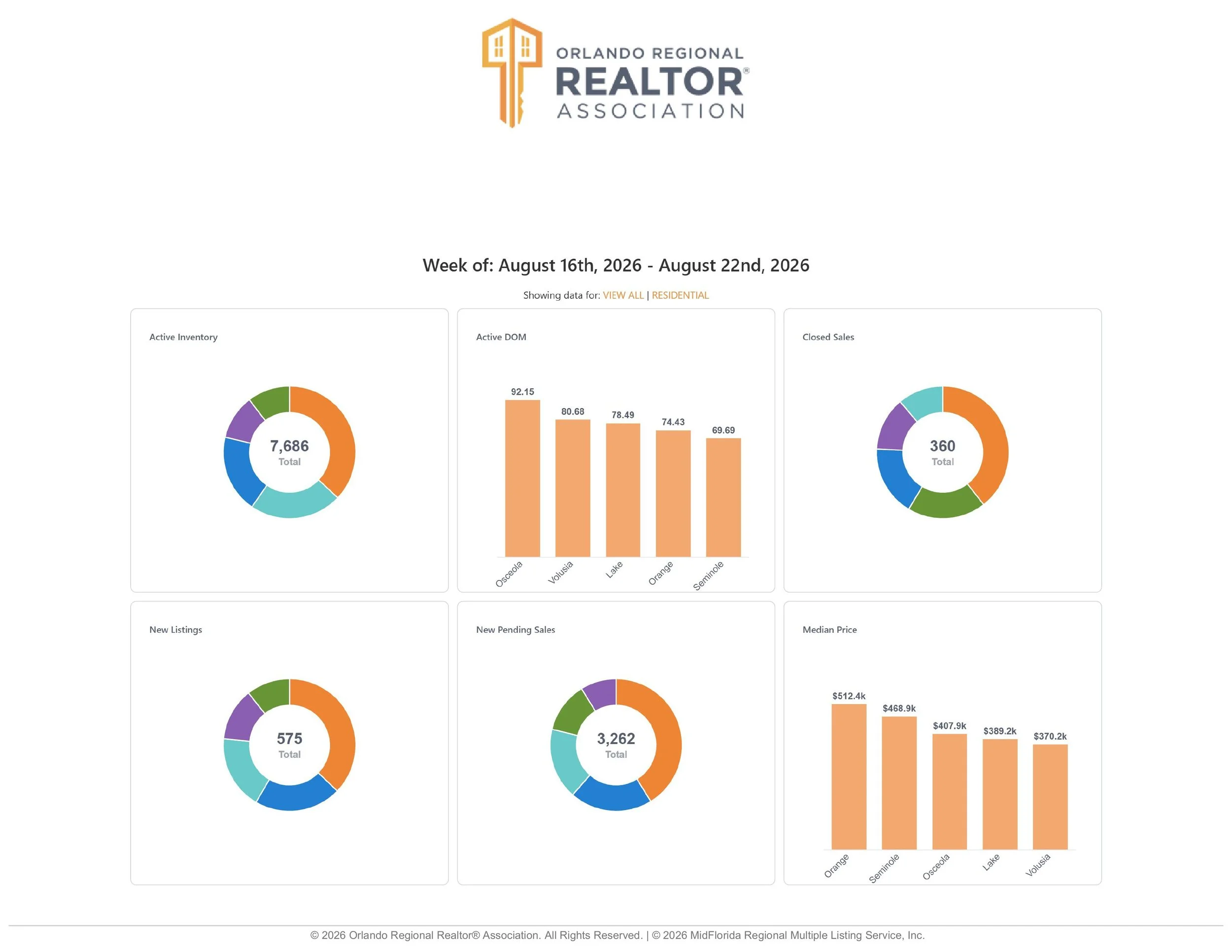
That means Orlando is not necessarily experiencing a dramatic buyer's market across every neighborhood or price range. But compared with the extreme inventory shortages of previous years, many buyers have more room to compare properties.
They can look at one home and then another.
They can evaluate the roof, HVAC system, insurance costs, homeowners association fees, commute, school preferences, and neighborhood before making an offer.
Most importantly, they may have opportunities to negotiate that simply weren't available when buyers were lined up for every new listing.
Negotiation Is Becoming Part of the Market Again
This may be one of the most important changes for anyone buying a home in Orlando.
ORRA's July report noted that 68% of REALTORS® surveyed said they were seeing more seller concessions than the previous year. Homes were also spending an average of 64 days on the market in July, slightly longer than June.
A concession could potentially involve things such as closing-cost assistance, repairs, credits or other negotiated terms, depending on the property, financing and seller.
That doesn't mean every seller will negotiate or that buyers should automatically submit aggressive low offers.
Well-priced, desirable homes can still attract significant attention.
What it does mean is that the conversation has changed.
A few years ago, buyers frequently asked, “How far above asking price do I need to go?”
Today, the conversation may be closer to, “What terms could make this purchase work for both sides?”
For buyers who have been waiting because they dislike intense bidding wars, that shift may be worth paying attention to.
Orlando City Data Shows Buyers Can Be Selective
It is also useful to distinguish between the larger Orlando-area market and Orlando city itself.
Zillow's Orlando data showed a typical home value of approximately $374,196 as of July 31, 2026, down 1.9% from the previous year. Zillow also reported that homes were going pending in roughly 29 days, while 66.6% of recorded June sales closed below their final list price. Zillow Orlando Housing Market Data
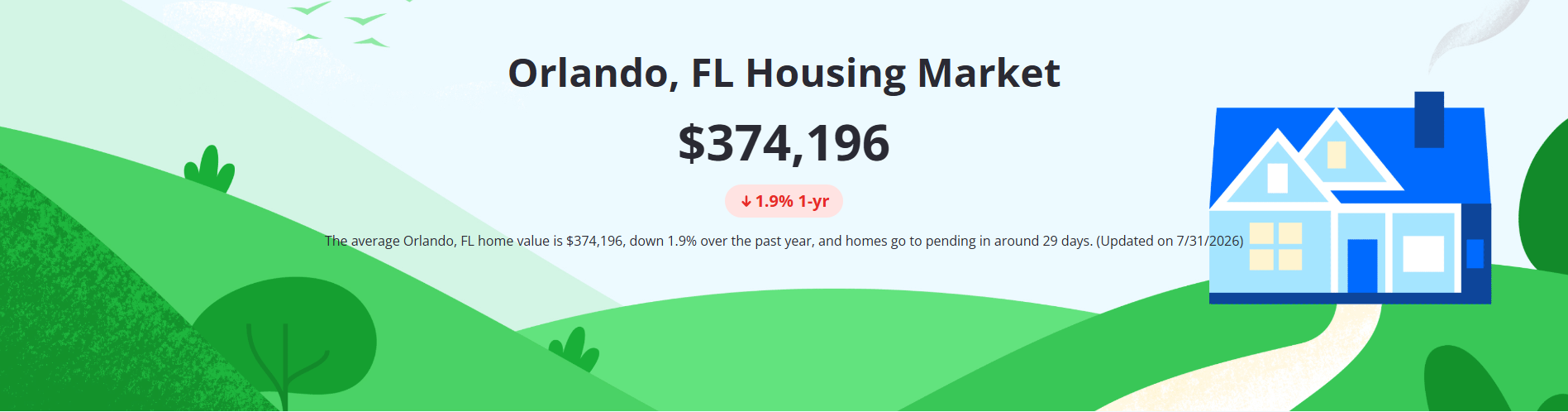
Those figures measure the market differently from ORRA, so they should not be directly compared dollar for dollar. However, both sources point toward the same broader takeaway:
Orlando homes are selling, but buyers have become price-conscious.
That matters tremendously for sellers.
Putting a property on the market with an aspirational price and assuming buyers will eventually catch up is a riskier strategy today. Buyers can see competing listings, monitor price reductions and compare recent sales before deciding whether a property represents good value.
Mortgage Rates Are Slowing Some Buyers—Not Eliminating Them
There is no question that mortgage rates influence today's market.
Freddie Mac reported that the average 30-year fixed mortgage rate was 6.65% on August 20, 2026, while the average 15-year fixed rate was 5.95%. Freddie Mac Current Mortgage Rates
Higher borrowing costs change affordability.
A buyer who qualified comfortably for a certain home price when rates were around 3% may need an entirely different budget with rates above 6%. That is one reason some Orlando buyers have shifted toward lower price points.
ORRA's mid-year survey found that 64% of surveyed local REALTORS® said buyers were waiting for rates to decline, while 53% reported buyers were shopping at lower price points to keep payments manageable.
But there is another side to those statistics.
If 64% of agents are seeing some buyers wait, that still leaves an active segment of the market moving forward.
Some buyers need another bedroom because their family has grown.
Others are relocating for work.
Some renters have decided they want a home of their own.
Other homeowners need to sell one property before buying another.
And some buyers simply find a home and financing combination that works within their budget.
Housing decisions are personal. The national mortgage rate is important, but it isn't the only factor determining when someone moves.
Orlando Is Not One Single Housing Market
This is where local knowledge becomes especially valuable.
Talking about an “Orlando home price” can make the market sound more uniform than it actually is.
Someone shopping for a downtown Orlando condo has a very different set of choices from a buyer searching for a single-family home in College Park. A buyer considering Lake Nona may encounter different property ages, community amenities and new-construction competition than someone looking in Dr. Phillips.
Expand the search into the larger Central Florida area and buyers may also consider communities such as Winter Garden, Oviedo, Winter Park, Clermont, Kissimmee or Sanford.
Even within the same ZIP code, market conditions can vary based on:
Price range
Property condition
Age of the roof and major systems
HOA or condo fees
Insurance considerations
School preferences
Lot size
Pool or waterfront features
New-construction competition
Proximity to employment centers and major roads
That's why broad headlines about the Orlando housing market should be treated as context—not as a substitute for evaluating a specific neighborhood and property.
Waiting for the “Perfect Market” Has Its Own Risks
Potential buyers often tell themselves they will purchase when rates fall substantially or when home prices drop.
That sounds logical, but housing markets rarely provide perfect conditions.
Suppose mortgage rates fall enough to significantly improve monthly affordability. Buyers who have been sitting on the sidelines may begin shopping again at the same time.
More demand can mean additional competition for desirable homes.
On the other hand, rates could remain elevated longer than expected.
Nobody can reliably predict both home prices and mortgage rates well enough to identify the perfect day to buy.
A more practical approach is to focus on the factors you can control:
Can you comfortably afford the payment?
Do you have enough cash for the down payment, closing costs and reserves?
Does the property fit your likely needs for the next several years?
Have you compared loan programs and lenders?
Have you investigated insurance, taxes and HOA expenses before committing?
If those pieces work, today's less frantic environment may actually provide advantages that were difficult to find during the peak seller's market.
What Orlando Buyers Should Do Right Now
Being active doesn't mean rushing.
Today's buyer has good reason to be methodical.
Start with a realistic monthly housing budget rather than simply looking at the maximum loan amount you can qualify for. Your actual housing expense can include principal, interest, property taxes, homeowners insurance, HOA fees and other property-specific costs.
Next, get fully pre-approved before becoming emotionally attached to a house.
Then compare listings carefully.
A property that has been sitting on the market longer than similar homes may deserve additional investigation. The seller may have more flexibility—or there may be a condition, pricing or location issue explaining why buyers have passed it over.
Have your agent review recent comparable sales and listing history before deciding on an offer.
The goal isn't simply to “get a deal.”
The goal is to buy the right property at terms you understand and can comfortably maintain.
What Orlando Sellers Need to Understand
Active buyers are good news for sellers, but they are not giving every listing an automatic pass.
Today's buyers can often choose between several properties. That makes pricing, presentation and condition more important.
A seller who prices a home according to where the market was two years ago may struggle even when neighboring properties are selling.
The first few weeks on the market are especially important because that's when a new listing generally receives the most attention.
Before listing, sellers should examine:
Recent comparable sales
Current competing listings
Properties that failed to sell
Recent price reductions nearby
Necessary repairs
Curb appeal and presentation
Insurance-related concerns
How their home compares with nearby new construction
A realistic pricing strategy doesn't mean giving the house away. It means positioning the property so today's buyers see enough value to schedule a showing and make an offer.
A Slower Market Can Be a Healthier Market
The dramatic real estate conditions of 2020 through 2022 reset people's expectations.
For a while, homes selling almost instantly seemed normal.
They weren't.
A market where buyers can inspect a property, consider their budget and negotiate with a seller is not necessarily a weak market. In many ways, it is a more functional one.
Likewise, sellers shouldn't assume that having a home on the market for several weeks automatically means something has gone wrong.
The current Orlando housing market in 2026 is giving buyers time to think while continuing to produce thousands of transactions.
That's an important distinction.
So, Are People Still Buying Homes in Orlando?
Absolutely.
They're just approaching purchases differently.
Buyers are paying closer attention to affordability. They're comparing more properties. They're negotiating when the numbers support it. Some are choosing lower price ranges, while others are waiting for a home that genuinely fits their priorities.
Meanwhile, sellers who understand the market and price their homes strategically are still finding buyers.
The market isn't racing at the speed it did during the pandemic-era housing boom, and that may actually be helpful for people who felt shut out by bidding wars and disappearing inventory.
Whether you should buy or sell today depends less on a national headline and more on your finances, your timeline, your property and the part of Central Florida you're considering.
If you're thinking about buying a home in Orlando or putting an Orlando property on the market, start by looking at the numbers for your specific neighborhood and price range.
The housing market hasn't stopped.
It has simply become a market where strategy matters again.
Frequently Asked Questions About the Orlando Housing Market
Is Orlando a buyer's market in 2026?
Conditions are becoming more favorable to buyers than they were during the extreme seller's market of previous years. ORRA reported 4.4 months of supply in July 2026, still below the six-month benchmark it uses for a balanced market. Buyers may have additional negotiating room, but conditions vary significantly by neighborhood and price range.
Are Orlando home prices falling?
It depends on the geographic area and measurement used. ORRA reported an Orlando-area median price of $410,494 in July 2026, down from June but above July 2025. Zillow's Orlando city home-value index, meanwhile, showed typical values down 1.9% year over year through July 2026. Looking at neighborhood-level comparable sales provides much more useful information for an individual buyer or seller.
Is now a good time to buy a house in Orlando?
There is no universal “best” time. Buyers currently have more inventory and potentially more negotiating opportunities than they had during the most competitive years of the market, but mortgage rates continue to affect affordability. The right time depends on your budget, financing, expected length of ownership and personal plans.
Thinking about buying or selling a home in Orlando? Get a local market analysis based on your neighborhood, price range and goals, not a national headline. Contact us to discuss what today's Central Florida real estate market means for you.