Should Sellers Pay a Buyer's Closing Costs in Orlando? A Complete Guide to Maximizing Your Home Sale

Learn when paying a buyer's closing costs can help you sell faster, attract stronger offers, and maximize your profit in Orlando's competitive real estate market.
Wondering if you should pay a buyer's closing costs when selling your Orlando home? Learn the pros, cons, negotiation strategies, and how seller concessions can help you sell faster and for more.
Selling a home involves much more than setting an asking price and accepting an offer. One of the most important negotiations often happens toward the end of the transaction when buyers request assistance with closing costs. Many sellers hesitate when they hear this request because it sounds like they're giving away money. However, paying part of a buyer's closing costs can sometimes be the smartest financial decision you make.
In Orlando's competitive real estate market, understanding when and why to offer closing cost assistance can help attract more qualified buyers, shorten your home's time on the market, and potentially increase your final sales price. Every transaction is different, and seller concessions should always be evaluated based on market conditions, buyer demand, and your overall financial goals.
Whether you're selling your first home or have experience with real estate, knowing how closing cost negotiations work can give you a significant advantage during the selling process.
What Are Buyer's Closing Costs?

Closing costs are the collection of expenses required to complete a real estate transaction. While buyers often prepare for a down payment, many are surprised to learn they must also budget for lender fees, title services, appraisal costs, prepaid taxes, homeowners insurance, escrow deposits, recording fees, and other administrative expenses. In Florida, buyers commonly spend between two and five percent of the home's purchase price on closing costs, depending on financing, lender requirements, and property details.
For many buyers, especially first-time homeowners, these upfront expenses can become a major financial hurdle. Even buyers who qualify for a mortgage may struggle to bring enough cash to closing. This is one reason seller-paid closing costs have become an effective negotiation tool.
Why Sellers Sometimes Pay the Buyer's Closing Costs
Many sellers assume they should never contribute toward buyer expenses, but today's housing market often rewards flexibility. Offering assistance with closing costs can make your property more appealing without requiring a significant reduction in the listing price.
Instead of lowering your asking price by $10,000, you might agree to pay a similar amount toward the buyer's closing costs. The buyer benefits from needing less cash upfront while you may still achieve a higher recorded sale price. In many cases, both parties walk away satisfied because the transaction addresses the buyer's immediate financial needs without dramatically affecting your overall proceeds.
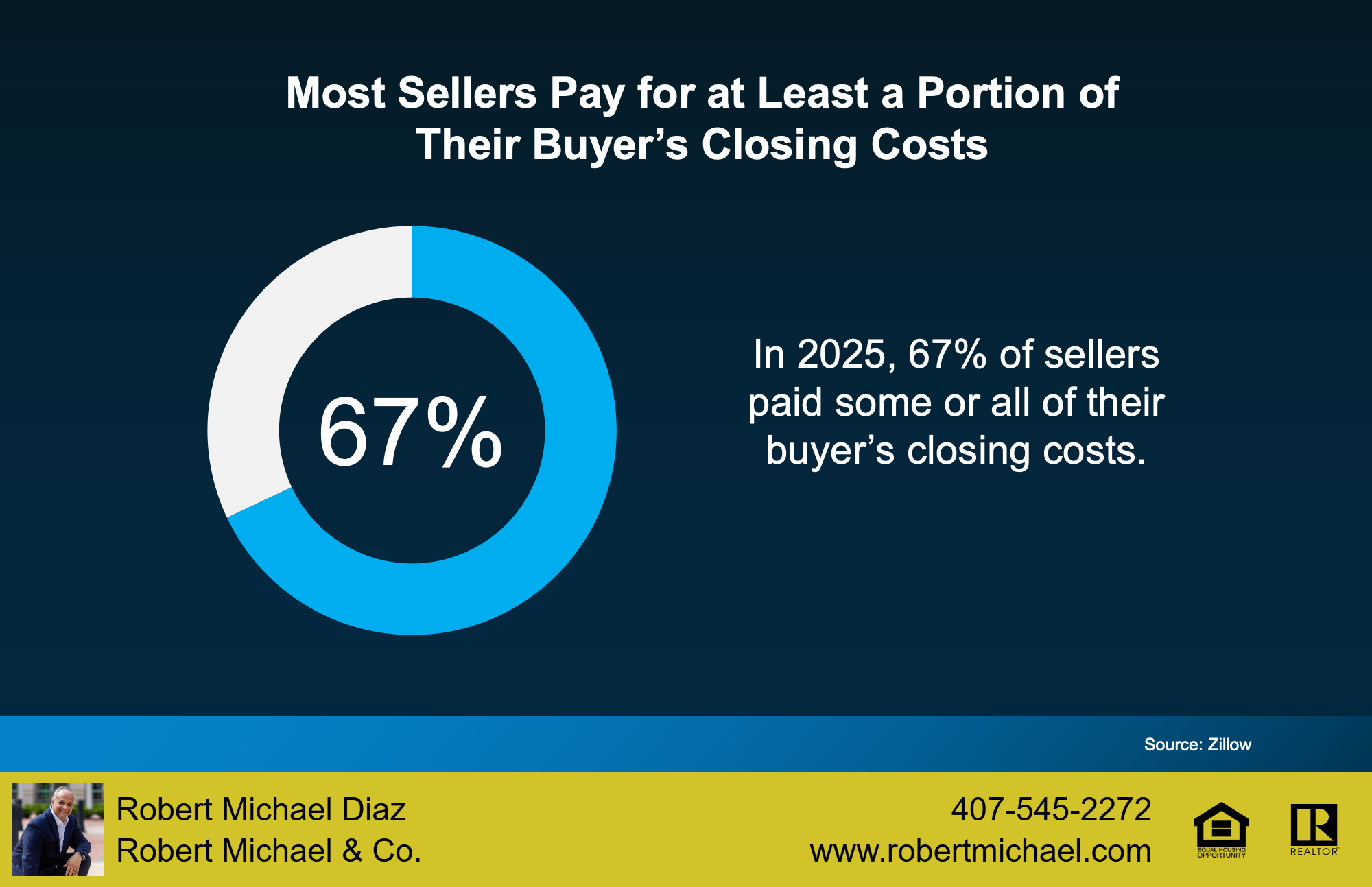
Recent Zillow data shows that in 2025, 67% of home sellers contributed toward buyers' closing costs, either covering them in full or paying a portion of the expenses (see chart below).
This strategy is especially useful when buyers have strong incomes but limited savings after making a down payment.
Orlando's Housing Market Makes Negotiation More Important
The Orlando housing market continues to attract buyers relocating from across the country thanks to Florida's lack of state income tax, growing employment opportunities, world-famous attractions, and year-round warm weather. However, higher mortgage rates and rising home prices have also made affordability a challenge for many families.
As inventory levels fluctuate, sellers who are willing to negotiate closing costs often receive greater attention from qualified buyers. A home that includes seller concessions may stand out from competing listings with similar pricing.
Neighborhoods throughout Orlando, including Lake Nona, Winter Garden, Windermere, Dr. Phillips, Oviedo, and Winter Park, continue to experience strong buyer demand, but today's purchasers are also looking for value. Offering financial assistance at closing can sometimes become the deciding factor between your property and another similar home.
Rather than viewing closing cost assistance as losing money, many successful Orlando sellers see it as an investment in securing a smoother and faster sale.
When Paying Closing Costs Makes Financial Sense
Every seller's situation is unique, but there are several scenarios where contributing toward buyer closing costs can produce better overall results.
If your home has been on the market longer than expected, offering seller concessions can generate renewed interest from buyers who previously considered the property slightly outside their budget.
If your local market has shifted toward buyers having more negotiating power, closing cost assistance may help your home remain competitive against similar listings.
If you're relocating for work or purchasing another property, selling quickly may be more valuable than holding out for every possible dollar.
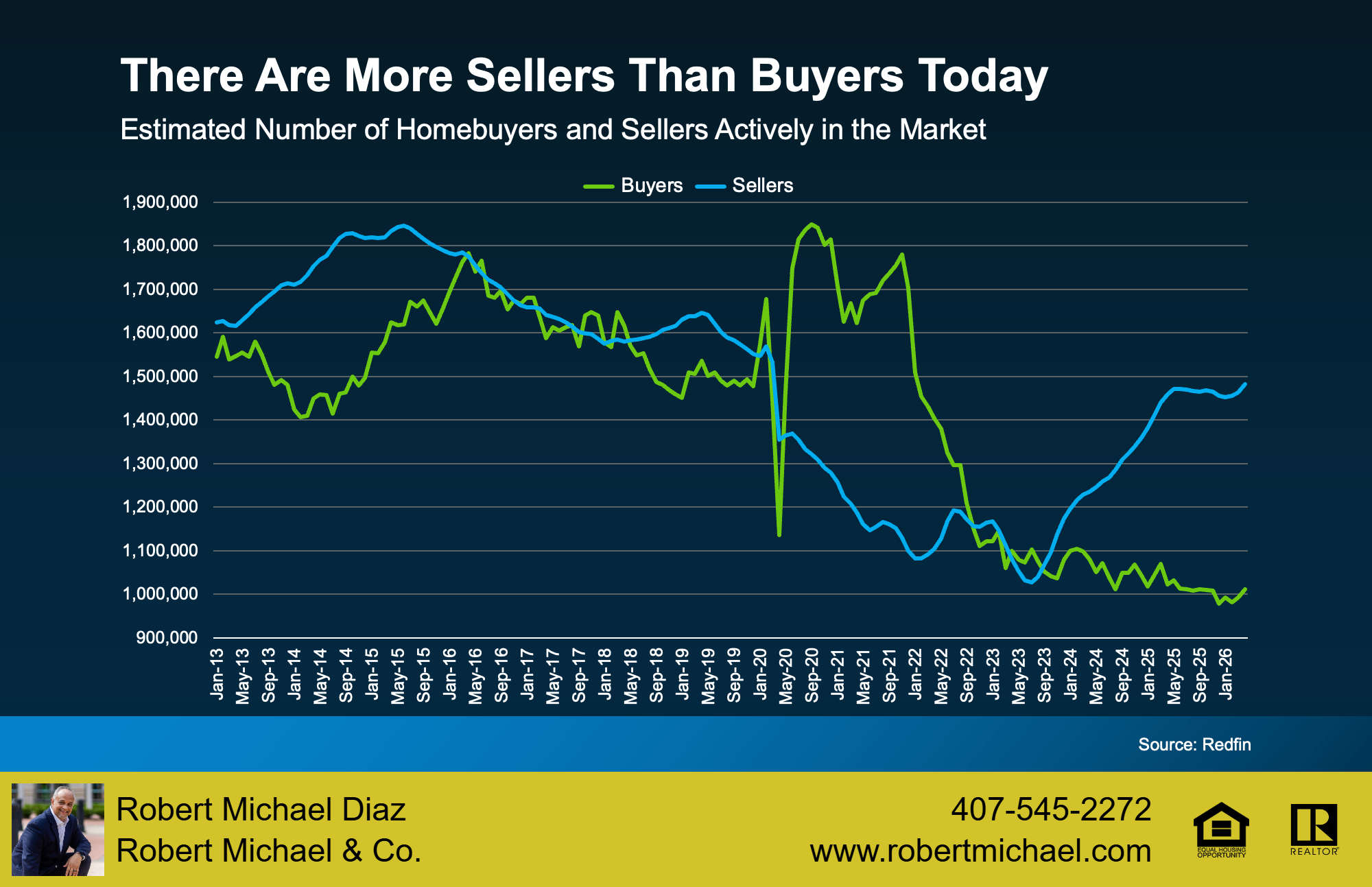
According to Redfin's latest market data, active sellers now outnumber active buyers, creating a noticeable shift in today's housing market dynamics (see graph below).
New construction communities throughout Orlando frequently offer incentives that include closing cost assistance. Existing homeowners competing with brand-new homes may choose to provide similar concessions to remain attractive to buyers.
Finally, if the buyer is financially qualified but needs assistance covering upfront expenses, helping with closing costs can prevent an otherwise solid transaction from falling apart.
Situations Where Sellers May Decline
Offering assistance isn't always the right choice.
If your home receives multiple offers within days of listing, there may be little reason to provide additional incentives. Strong seller's markets often allow homeowners to negotiate from a stronger position.
Likewise, if your equity is limited or your financial goals require maximizing your proceeds, paying buyer closing costs may not fit your objectives.
Each transaction should be evaluated based on your individual circumstances, current market conditions, and advice from your real estate professional.
Closing Cost Assistance Is Negotiable
One of the biggest misconceptions in real estate is that closing costs follow fixed rules. In reality, nearly every expense can become part of the negotiation process.
The amount a seller contributes is often influenced by the buyer's loan program, local customs, competing offers, inspection results, appraisal outcomes, and overall market conditions. Florida real estate transactions regularly involve negotiations over who pays which expenses, and the final agreement is outlined within the purchase contract.
Rather than automatically accepting or rejecting a request, sellers should carefully review the complete financial picture. A slightly higher sales price combined with closing cost assistance may produce nearly identical net proceeds compared to accepting a lower purchase offer without concessions.
Understanding Seller Concessions
Seller concessions simply refer to financial contributions made by the seller to reduce the buyer's out-of-pocket expenses.
These concessions can help cover lender fees, title charges, escrow expenses, prepaid taxes, insurance costs, or other eligible closing expenses. Mortgage programs often limit how much sellers may contribute, depending on the buyer's financing type, so experienced guidance is important during negotiations.
Because buyers frequently focus on the amount of cash required at closing rather than monthly mortgage payments, seller concessions can significantly improve affordability without dramatically changing long-term financing.
Looking Beyond the Purchase Price
Many sellers focus exclusively on the number written on the purchase offer. While the sale price matters, the final amount you receive depends on numerous financial details.
Inspection negotiations, appraisal adjustments, requested repairs, closing costs, timing, financing contingencies, and moving schedules all contribute to the overall value of an offer.
Sometimes the highest offer actually produces the lowest net proceeds once all concessions and repair requests are considered.
Evaluating the complete transaction rather than only the purchase price leads to better financial decisions.
Working With an Experienced Orlando Real Estate Professional

An experienced local real estate professional understands how Orlando neighborhoods perform, what buyers currently expect, and how seller concessions compare with competing listings.
Rather than guessing whether paying buyer closing costs is appropriate, your agent can analyze comparable sales, evaluate current market activity, estimate your projected net proceeds, and negotiate terms that protect your interests.
Every neighborhood has its own pricing trends and buyer expectations, making local knowledge especially valuable during negotiations.
Final Thoughts
Paying a buyer's closing costs should never be viewed as simply giving money away. In many situations, it becomes a strategic tool that helps sellers attract more buyers, complete transactions faster, and maximize their overall financial outcome.
For Orlando homeowners, flexibility can often lead to stronger offers and fewer delays during the closing process. Whether you're selling a family home, an investment property, or preparing for your next move, understanding how closing cost negotiations work allows you to make informed decisions instead of emotional ones.
The best approach is to evaluate every offer based on its complete financial impact rather than focusing solely on the purchase price. With the right negotiation strategy and local market expertise, seller-paid closing costs can become an investment that helps you achieve a successful home sale.