Is It Still a Seller’s Market in Orlando? What Today’s Housing Data Means for Homeowners in 2026

See how Orlando's housing market is changing in 2026.
Discover whether Orlando is still a seller’s market in 2026. Learn how inventory, buyer demand, home prices, and local market trends impact home sellers and buyers in Orlando, FL.
The real estate market has experienced significant changes over the past few years. After an unprecedented period of soaring home prices, limited inventory, and fierce buyer competition, many homeowners are now asking the same question: Is it still a seller’s market?
The answer is more nuanced than a simple yes or no.
Across the United States, housing conditions continue to vary by region, but many local markets—including Orlando—still offer favorable opportunities for sellers despite an increase in available homes. While buyers now have more choices than they did during the pandemic housing boom, well-priced homes in desirable neighborhoods continue to attract strong interest.
Understanding current market conditions is essential before deciding whether to sell. By looking beyond national headlines and focusing on local trends, homeowners can make informed decisions that maximize their investment.
Understanding What Defines a Seller’s Market
A seller’s market exists when the demand for homes exceeds the available supply. In these conditions, buyers compete for fewer listings, which often results in faster sales, multiple offers, and stronger negotiating power for sellers.
Housing experts generally consider a balanced market to have approximately five to six months of housing inventory. When inventory falls below that level, sellers typically maintain the advantage because buyers have fewer options.
Although housing inventory has increased compared to previous years, many areas still remain below historical averages. This means sellers continue to benefit from limited competition, especially when their homes are properly prepared and competitively priced.
The Orlando Housing Market Continues to Show Strength
Orlando remains one of Florida's fastest-growing metropolitan areas. Population growth, employment expansion, tourism, and continued business investment have helped support long-term housing demand.
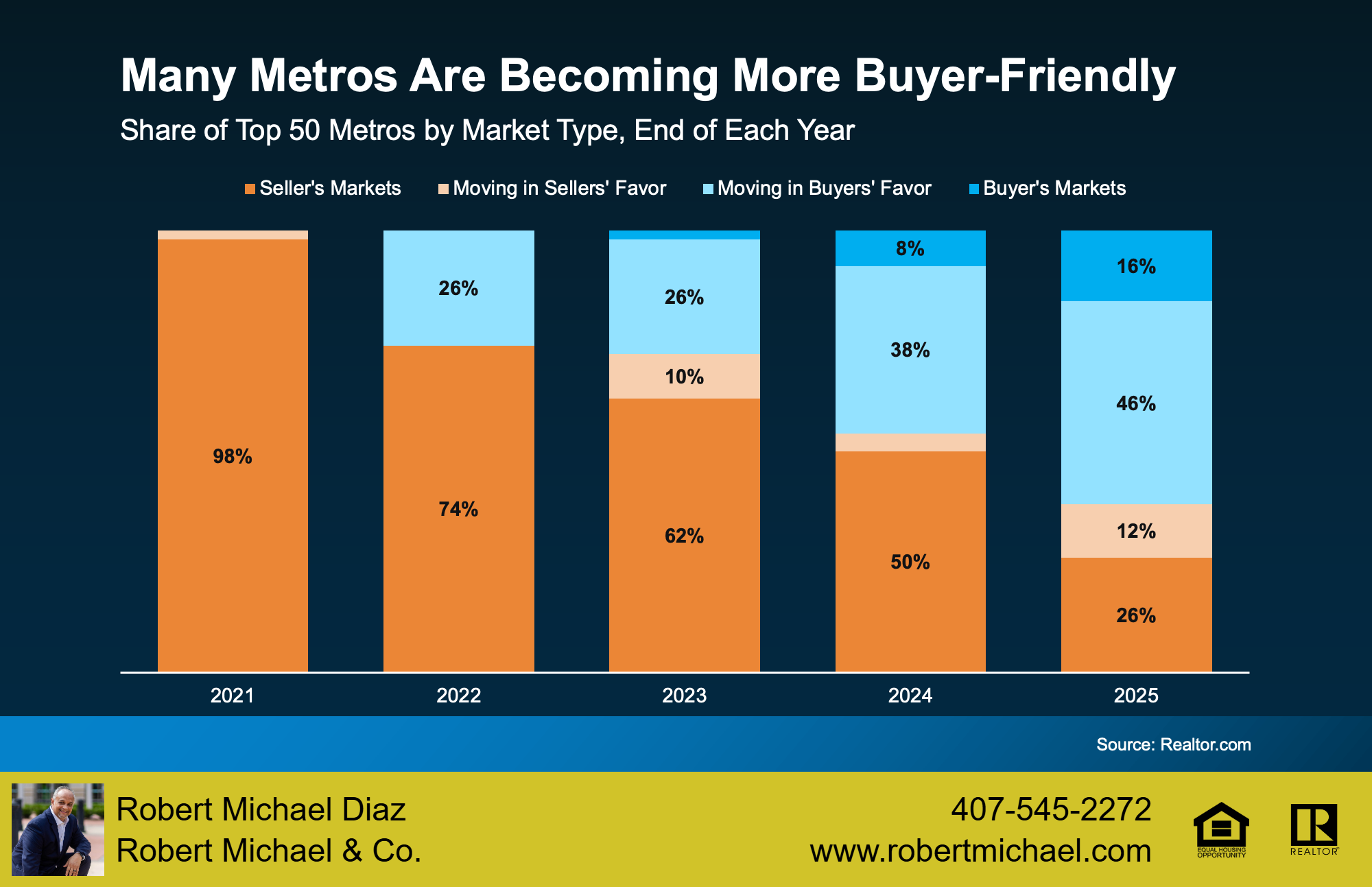
Looking at how the latest Realtor.com data has evolved across the 50 largest metro markets, one trend stands out clearly (see the graph below).
Families relocating from higher-cost states, remote workers seeking better affordability, and retirees attracted by Florida's lifestyle continue to fuel buyer interest throughout Central Florida.
Popular communities including Lake Nona, Winter Garden, Windermere, Oviedo, Winter Park, Clermont, and Dr. Phillips consistently attract buyers looking for quality schools, newer developments, and convenient access to employment centers.
Even though buyers have become more selective, homes in desirable Orlando neighborhoods that are priced appropriately often receive significant attention shortly after hitting the market.
Inventory Has Improved, But It Is Still Historically Limited

One of the biggest differences between today's housing market and the market of several years ago is inventory.
More homeowners are deciding to sell, giving buyers additional choices. New construction has also contributed to increasing housing supply throughout parts of Central Florida.
However, inventory levels remain well below long-term historical norms in many Orlando communities. This creates a healthier market without eliminating the advantages that sellers still enjoy.
Instead of expecting dozens of offers within hours, sellers should expect a more balanced environment where buyers carefully compare homes before making decisions. High-quality listings continue to perform well, while overpriced properties often remain on the market longer.
This shift encourages realistic pricing and better presentation rather than relying solely on limited inventory.
Home Prices Continue to Hold Firm
One concern many homeowners have is whether home prices are beginning to decline.
While appreciation has slowed from the record-breaking pace experienced during recent years, home values remain remarkably resilient across much of Orlando.
Rather than dramatic price drops, most neighborhoods are experiencing slower but healthier appreciation. This is a positive development because sustainable growth creates greater long-term market stability.
Homeowners who purchased before or during the early stages of the market boom have generally accumulated significant equity, providing flexibility whether they plan to sell, relocate, or purchase another property.
Pricing remains highly dependent on neighborhood, condition, school district, and local demand.
Buyers Have Become More Selective
Today's buyers approach the market differently than they did just a few years ago.
Higher mortgage rates have increased monthly housing costs, causing buyers to become more careful about their purchasing decisions.
Instead of making immediate offers on every available property, buyers now spend more time comparing homes, evaluating neighborhoods, and negotiating repairs or concessions.
For sellers, this means presentation matters more than ever.
Professionally staged homes, updated interiors, attractive landscaping, quality photography, and accurate pricing significantly improve the likelihood of receiving strong offers.
Homes requiring extensive repairs or priced above comparable sales often experience longer marketing times.
Why Orlando Continues to Attract Buyers
Several local economic factors continue supporting Orlando's housing market.
The region benefits from a diverse employment base including healthcare, aerospace, technology, hospitality, higher education, and logistics.
Major employers continue expanding operations throughout Central Florida, attracting professionals relocating from across the country.
Orlando International Airport provides convenient domestic and international travel, while world-famous attractions continue drawing millions of visitors annually.
Additionally, Florida's lack of state income tax remains an attractive financial advantage for many relocating households.
These long-term fundamentals help create ongoing housing demand that supports home values throughout the region.
Mortgage Rates Have Changed Buyer Behavior
Mortgage rates remain one of the largest influences on today's housing market.
Although borrowing costs are higher than the historically low rates seen several years ago, buyers continue entering the market because life events still drive housing decisions.
Marriage, growing families, career opportunities, retirement, and relocation remain powerful motivations that cannot always be delayed.
Many buyers understand that mortgage rates may change over time through refinancing, while the opportunity to purchase the right home may not always be available.
This continued demand helps support seller activity even in a more balanced market.
Local Expertise Matters More Than Ever
One of the biggest mistakes homeowners make is relying solely on national housing headlines.
Real estate remains highly local.
Conditions can vary dramatically between different Orlando neighborhoods.
For example, homes near Medical City in Lake Nona may experience different buyer demand than properties located in downtown Orlando or suburban communities like Clermont or Apopka.
Working with a local real estate professional who understands neighborhood pricing, buyer trends, school districts, and inventory levels provides a significant advantage when preparing a property for sale.
Accurate pricing based on recent comparable sales often determines whether a home sells quickly or remains on the market for months.
Preparing Your Home for Success
Today's market rewards preparation.
Before listing a home, sellers should focus on creating an excellent first impression both online and in person.
Professional photography, clean landscaping, fresh paint, decluttering, minor repairs, and thoughtful staging can dramatically improve buyer perception.
Many buyers begin their home search online, making listing photos one of the most important marketing tools available.
A well-presented property often receives more showings, stronger offers, and better overall negotiating opportunities.
What Sellers Should Expect During the Selling Process
Selling a home today is different than it was during the height of the housing frenzy.
Instead of expecting immediate bidding wars, sellers should anticipate informed buyers who carefully evaluate value, condition, financing, and neighborhood characteristics.
Inspection negotiations have become more common, and buyers may request seller concessions depending on local competition.
This does not indicate a weak market.
Rather, it reflects a healthier environment where both buyers and sellers have opportunities to negotiate fair agreements.
Proper pricing, strategic marketing, and realistic expectations remain the keys to a successful transaction.
Looking Ahead for Orlando Real Estate

Most housing analysts expect Orlando to remain one of Florida's strongest housing markets due to continued population growth, employment expansion, and long-term economic development.
While inventory may continue improving, demand is expected to remain steady as more individuals and families relocate to Central Florida.
Instead of returning to the extreme seller conditions experienced during recent years, the market appears to be transitioning toward a healthier balance that benefits both buyers and sellers.
For homeowners considering selling, this environment still presents meaningful opportunities—especially before additional inventory creates more competition.
Final Thoughts
The Orlando housing market has certainly evolved, but sellers should not assume their advantage has disappeared. Inventory has improved, buyers have become more selective, and pricing strategies now matter more than ever. Yet strong local demand, continued population growth, and limited housing supply compared to historical averages continue to create favorable conditions for well-prepared sellers.
Success in today's market depends less on timing the national housing cycle and more on understanding neighborhood-specific trends, pricing accurately, and presenting a home in its best possible condition. Homeowners who combine these strategies with local market expertise are often well-positioned to achieve excellent results.
As Orlando continues to grow and attract new residents, its housing market remains one of Florida's most resilient. Whether you're planning to sell this year or simply exploring your options, understanding the current market landscape is the first step toward making a confident real estate decision.